wonzh

ベアリングの潤滑 オイル vs グリース:技術的・工学的観点から

1. Introduction Bearing reliability is fundamentally linked to lubrication performance. Industry data consistently shows that a significant percentage of premature bearing failures are lubrication-related—caused by improper lubricant type, contamination, insufficient film thickness, or thermal degradation. One of the most critical decisions in rotating equipment design and maintenance is whether to use lubrication oil or grease. While both serve the same fundamental purpose—reducing friction and wear—their behavior, performance envelope, and maintenance implications differ substantially. This article provides a technical comparison based on lubrication theory, thermal management, contamination control, speed capability, and engineering selection criteria. 2. Lubrication Fundamentals Both oil and grease aim to form an elastohydrodynamic lubrication (EHL) film between rolling […]

ベアリングの潤滑 オイル vs グリース:技術的・工学的観点から 続きを読む »

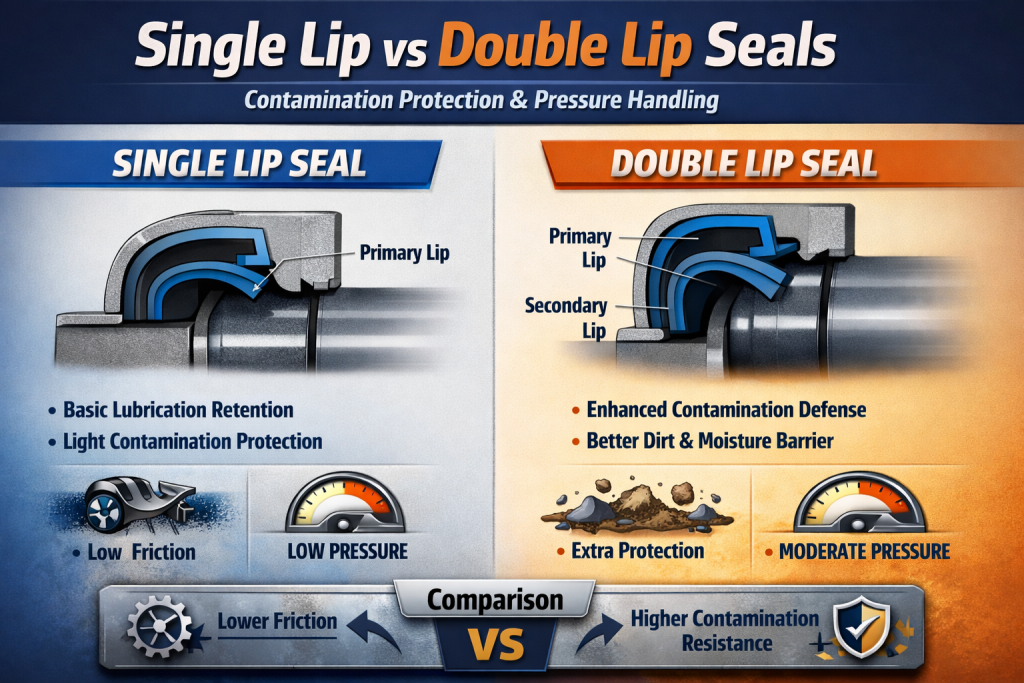
シングルリップとダブルリップの比較:汚染防止と圧力処理

In industrial machinery, selecting the correct sealing solution directly impacts equipment reliability, leakage control, and contamination protection. Two widely used radial sealing designs are single lip seals and double lip seals. While both are designed to retain lubrication and exclude contaminants, their structural differences significantly affect performance in pressure and dirty environments. Understanding these differences helps engineers optimize sealing systems for hydraulic, pneumatic, and rotating applications. 1. Structural Differences Single Lip Seal A single lip seal features one primary sealing edge that contacts the shaft or rod surface. It is primarily designed to: Single lip designs are simpler, generate less heat, and are suitable for clean operating conditions. Double Lip

シングルリップとダブルリップの比較:汚染防止と圧力処理 続きを読む »

OEMベアリングのカスタマイズ:エンジニアが知っておくべきこと

In modern industrial equipment, standard bearings do not always meet the performance, durability, or dimensional requirements of specialized applications. OEM bearing customization allows engineers to optimize load capacity, speed performance, environmental resistance, and service life according to precise operational needs. Understanding the engineering considerations behind customized bearings helps ensure reliability, cost efficiency, and long-term equipment performance. 1. When Standard Bearings Are Not Enough OEM customization is typically required when equipment operates under: In such cases, modifying internal design, materials, or surface treatments can dramatically improve performance. 2. Load and Application Analysis Before customizing a bearing, engineers must evaluate: Accurate load calculation determines internal geometry, rolling element size, and cage design.

OEMベアリングのカスタマイズ:エンジニアが知っておくべきこと 続きを読む »

ワイヤーロープ交換によるダウンタイムの削減

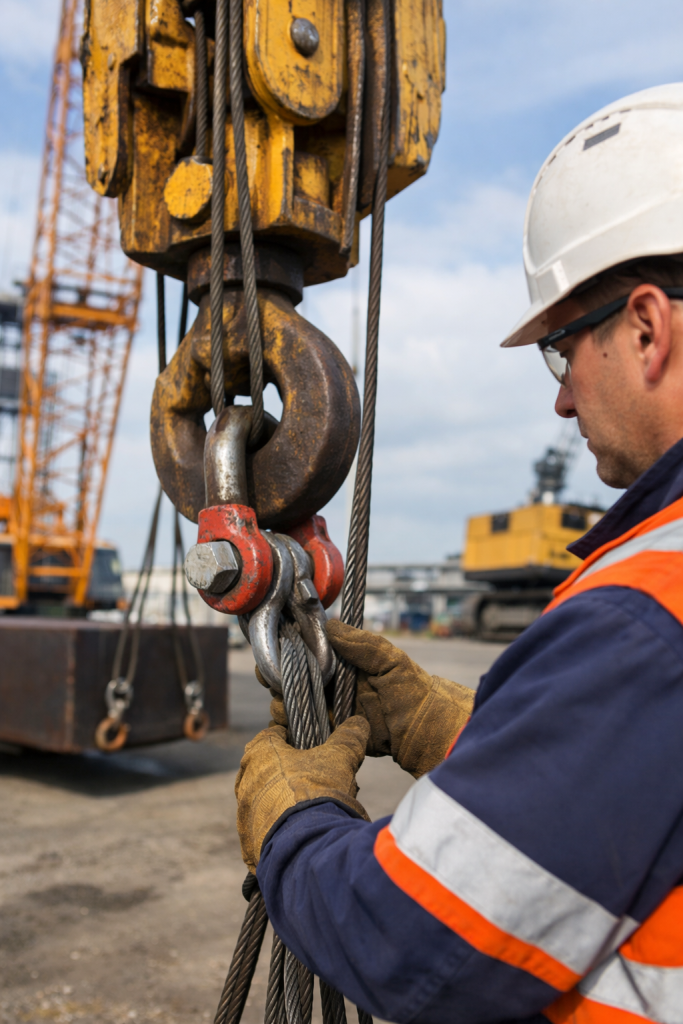
Wire rope replacement is an unavoidable part of maintaining cranes, hoists, winches, and other lifting systems. However, unplanned or poorly managed replacement can lead to extended downtime, production delays, and increased labor costs. By implementing strategic engineering, monitoring, and maintenance practices, industrial facilities can significantly reduce downtime associated with wire rope replacement. 1. Understand the Root Causes of Premature Replacement Before optimizing replacement procedures, it is essential to identify why wire ropes are being replaced frequently. Common causes include: Addressing root causes extends rope service life and reduces replacement frequency. 2. Select the Correct Wire Rope for the Application Choosing the appropriate wire rope design dramatically impacts durability: Application-specific selection

ワイヤーロープ交換によるダウンタイムの削減 続きを読む »

重加工工場向け高強度ワイヤロープソリューション

Heavy fabrication plants operate under extreme load conditions, handling oversized steel structures, pressure vessels, bridge components, and industrial modules. In these demanding environments, high-strength wire rope solutions are critical for ensuring lifting safety, load stability, and operational efficiency. Selecting the right wire rope construction, material grade, and maintenance strategy directly impacts productivity and long-term equipment reliability. 1. Operational Demands in Heavy Fabrication Fabrication facilities typically involve: These applications require wire ropes that can withstand high static loads, dynamic shock loading, repetitive bending, and abrasive contact with drums and sheaves. 2. Key Characteristics of High-Strength Wire Rope To perform reliably in fabrication plants, wire ropes must offer: Optimized rope construction improves

重加工工場向け高強度ワイヤロープソリューション 続きを読む »

設計から配備まで:長寿命の産業用部品の構築

Creating industrial components that last requires more than simply using durable materials. Long-life components are the result of careful engineering, rigorous testing, and proper deployment strategies. From initial design to installation and ongoing maintenance, each stage affects the reliability, performance, and service life of machinery in industrial environments. 1. Design Stage: Engineering for Longevity The foundation of long-life components begins with robust design: 2. Prototyping and Testing Before mass production, components must be validated: Testing ensures the design translates into reliable, real-world performance. 3. Manufacturing Stage: Quality and Precision Consistent, high-quality production is critical: A strong manufacturing process ensures components meet design specifications. 4. Deployment and Installation Proper installation is

設計から配備まで:長寿命の産業用部品の構築 続きを読む »

24時間365日の産業運転に対応する信頼性の高いコンポーネントの設計

Industrial equipment that operates continuously, such as production lines, mining machinery, or processing plants, demands components engineered for maximum reliability, minimal downtime, and long service life. Designing components for 24/7 operation involves careful selection of materials, tolerance management, lubrication, sealing, and monitoring systems to withstand constant mechanical, thermal, and environmental stress. 1. Understanding Continuous Operation Requirements Components in round-the-clock industrial machinery must withstand: Reliability engineering focuses on anticipating these stresses and designing components that maintain performance under such conditions. 2. Material Selection for High-Durability Components Materials must resist wear, corrosion, and fatigue: Choosing the right material combination ensures components endure extended duty cycles without frequent replacement. 3. Precision Engineering and

24時間365日の産業運転に対応する信頼性の高いコンポーネントの設計 続きを読む »

産業機械のメンテナンス・コストを削減する方法

Maintenance costs are a significant portion of operating expenses in industrial operations. Unexpected downtime, frequent part replacements, and inefficient maintenance practices can drastically reduce productivity and profitability. By implementing strategic engineering, preventive practices, and data-driven maintenance, manufacturers can minimize costs while maximizing equipment reliability and lifespan. 1. Implement Preventive Maintenance Programs Preventive maintenance focuses on regularly scheduled inspections and servicing before failures occur: Preventive maintenance reduces the likelihood of costly emergency repairs and unplanned downtime. 2. Use High-Quality Components Investing in durable, industrial-grade components reduces replacement frequency: While upfront costs may be higher, the extended service life reduces total lifecycle costs. 3. Optimize Lubrication Practices Proper lubrication prevents friction-related wear

産業機械のメンテナンス・コストを削減する方法 続きを読む »

大型リフティング機器の工学的考察

Heavy-duty lifting equipment, such as cranes, hoists, and excavators, plays a critical role in construction, mining, shipping, and industrial operations. Designing and maintaining these machines requires a deep understanding of load dynamics, material selection, safety standards, and component reliability. Proper engineering considerations ensure operational efficiency, extend equipment lifespan, and prevent catastrophic failures. 1. Understanding Load Dynamics Heavy-duty lifting equipment experiences a variety of forces: Accurate calculation of these loads is essential to avoid over-stressing mechanical components, especially wire ropes, bearings, and hydraulic systems. 2. Structural Integrity The main frame, boom, and support structures must withstand repeated stress cycles without deformation. Key engineering considerations include: Structural integrity directly impacts operator safety

大型リフティング機器の工学的考察 続きを読む »

工業用シーリングシステム設計の完全ガイド

Industrial sealing systems are critical to the reliability, safety, and efficiency of mechanical and hydraulic equipment. From heavy-duty mining machinery to chemical processing systems, properly engineered seals prevent leakage, exclude contaminants, and maintain system pressure under demanding operating conditions. This guide provides a comprehensive overview of industrial sealing system design principles, material selection, failure prevention, and application best practices. 1. Understanding the Function of Sealing Systems Sealing systems serve several essential purposes: Seals are typically classified into: Each type requires specific design considerations. 2. Key Factors in Sealing System Design Successful sealing system design depends on analyzing multiple operating parameters: Operating Pressure High-pressure systems require anti-extrusion features such as backup

工業用シーリングシステム設計の完全ガイド 続きを読む »

jaJapanese