製品知識

産業用ワイヤーロープ選定ガイド:耐荷重、安全係数、規格の説明

Wire ropes are fundamental load-bearing elements in lifting, hoisting, and mechanical handling systems. Despite their widespread use, wire rope selection is often reduced to basic diameter matching or catalog comparison. In real industrial environments, this simplified approach is a frequent source of premature wear, reduced service life, and in severe cases, safety incidents. Proper wire rope selection requires an understanding of how load capacity is defined, how safety factors are applied, and how industry standards should be interpreted in practice. A wire rope that is technically compliant but poorly matched to operating conditions can still represent a significant operational risk. Load Capacity and the Meaning of Minimum Breaking Load The […]

産業用ワイヤーロープ選定ガイド:耐荷重、安全係数、規格の説明 続きを読む »

ベアリングの故障解析:エンジニアが無視できない早期警告サイン

Bearings are critical components in rotating machinery, yet they are often treated as standardized parts that can be replaced without deeper analysis. In real industrial environments, bearing failure is rarely an isolated event. It is usually the result of a chain of mechanical, thermal, and environmental factors acting over time. Understanding how bearing damage develops, and how early warning signs appear, is essential for preventing unplanned downtime and secondary equipment damage. Contrary to common assumptions, most bearings do not fail suddenly. Long before seizure or fracture occurs, measurable changes take place in noise, vibration behavior, temperature, and lubrication condition. These changes provide valuable information about internal degradation mechanisms, provided they

ベアリングの故障解析:エンジニアが無視できない早期警告サイン 続きを読む »

ロープ固定具の両端故障:原因、分析、予防

1. Introduction Rope fixtures, including wire rope terminations and end fittings, are critical components in lifting, hoisting, and safety systems. Failures at the rope ends can lead to catastrophic accidents, equipment damage, and operational downtime. Understanding the causes and mechanisms of these failures is essential for engineers and maintenance professionals. 2. Common Causes of End-Fitting Failures 3. Inspection and Monitoring 4. Prevention Strategies 5. Conclusion Failures of rope fixtures at each end are preventable with proper selection, installation, and maintenance. Prioritizing inspection and adopting engineering best practices ensures safety, reliability, and longevity of rope systems.

ロープ固定具の両端故障:原因、分析、予防 続きを読む »

産業用ワイヤロープにおけるIWRCの意味とは?強度と安全性の分析

In industrial lifting systems, abbreviations like IWRC, FC, and WSC appear frequently in rope specifications. Among them, IWRC is one of the most important for crane, mining, and heavy-duty applications. Understanding what IWRC means — and how it affects strength, fatigue resistance, and safety — is critical for engineers, maintenance teams, and procurement professionals. This guide explains: 1. What Does IWRC Stand For? IWRC = Independent Wire Rope Core It means the rope’s core is not fiber or a single strand, but a separate wire rope inside the main rope. A typical rope structure looks like this: Outer strands (6 or 8 strands)→ Wrapped around→ A smaller independent steel wire

産業用ワイヤロープにおけるIWRCの意味とは?強度と安全性の分析 続きを読む »

ベアリングのメンテナンスでよくある間違いトップ10とその回避方法

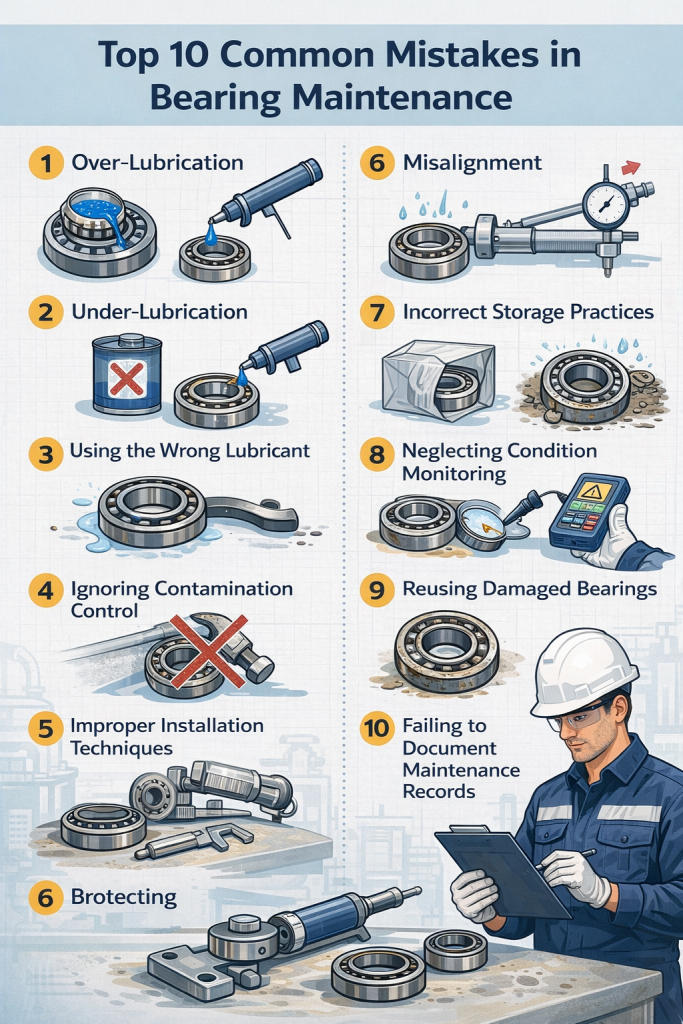
Bearings are critical components in rotating machinery. Whether installed in pumps, motors, conveyors, or gearboxes, their reliability directly affects equipment uptime, safety, and operating costs. Despite their importance, bearing failures are often caused not by product defects, but by improper maintenance practices. Based on field experience supporting industrial clients, this article outlines the ten most common mistakes in bearing maintenance—and practical solutions to avoid them. 1. Over-Lubrication One of the most widespread misconceptions is that “more grease means better protection.” In reality, over-lubrication increases internal pressure, causes heat buildup, and can rupture seals. Best Practice:Follow manufacturer-recommended grease quantity and relubrication intervals. Use calculated grease volume based on bearing size and

ベアリングのメンテナンスでよくある間違いトップ10とその回避方法 続きを読む »

産業用ベアリングのメンテナンスと長寿命化戦略:寿命延長のためのテクニック

Industrial bearings are critical components that directly influence the efficiency, reliability, and safety of machinery. Proper maintenance is essential to maximize bearing lifespan, reduce unplanned downtime, and lower total operating costs. This guide provides a comprehensive overview of maintenance strategies, practical techniques, and engineering considerations to extend bearing life in industrial applications. Understanding Bearing Wear and Failure Bearings fail primarily due to mechanical wear, lubrication issues, contamination, or misalignment. Understanding the root causes is key to designing a maintenance strategy: Suggested Figure: Bearing Failure Modes Diagram – fatigue, lubrication, contamination, misalignment Key Maintenance Techniques 1. Proper Lubrication Management Lubrication prevents friction, reduces heat generation, and minimizes wear: Suggested Chart: Lubrication

産業用ベアリングのメンテナンスと長寿命化戦略:寿命延長のためのテクニック 続きを読む »

オフショアにおけるワイヤーロープの腐食防止とメンテナンス戦略

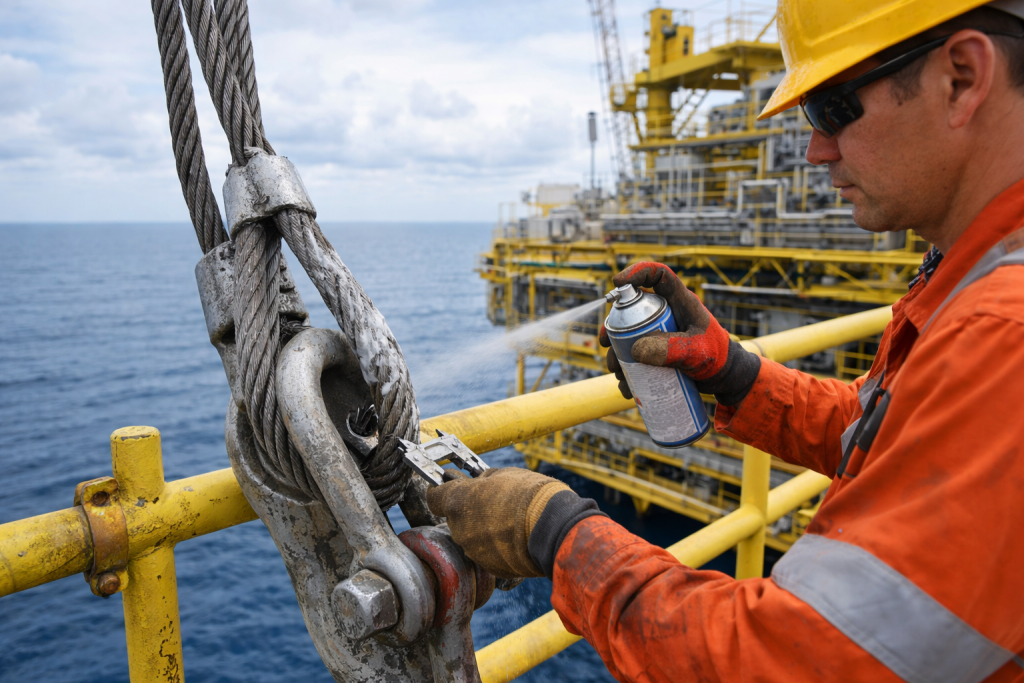
Wire ropes are essential components in offshore operations, including cranes, winches, mooring lines, and lifting equipment. The harsh marine environment exposes steel wire ropes to saltwater, humidity, strong winds, and variable temperatures, which accelerate corrosion and reduce their operational lifespan. Ensuring the durability and safety of wire ropes in offshore applications requires a comprehensive approach that combines proper material selection, corrosion protection, lubrication, inspection, and maintenance strategies. Material Selection and Protective Coatings Selecting the appropriate material is the first step in mitigating corrosion for offshore wire ropes. Carbon steel wire ropes, while strong and cost-effective, are highly susceptible to corrosion in saltwater environments. Stainless steel ropes provide excellent corrosion resistance

オフショアにおけるワイヤーロープの腐食防止とメンテナンス戦略 続きを読む »

ワイヤーロープの交換時期の見極め方

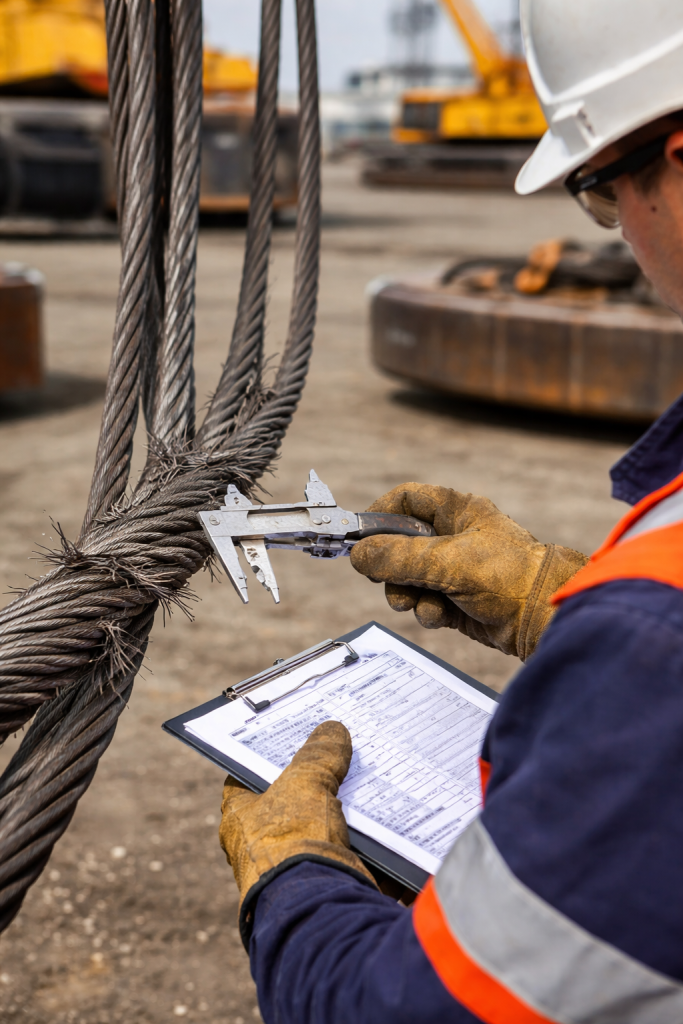
Wire ropes are critical components in lifting, hoisting, and industrial applications. The safety and reliability of operations depend on the integrity of the wire rope, making timely replacement essential. Determining when a wire rope has reached the end of its service life requires a comprehensive evaluation of visible damage, operational history, environmental conditions, and manufacturer guidelines. Failure to replace worn wire ropes can lead to catastrophic accidents, equipment damage, and operational downtime. Visual Inspection and Broken Wires One of the most direct methods to assess wire rope condition is visual inspection. Broken wires on the rope surface are the most common indicator of wear. For example, international standards such as

ワイヤーロープの交換時期の見極め方 続きを読む »

クレーン鋼ワイヤロープ:構造、力学、工学的選択の原則

1. Introduction Crane steel wire rope is a critical load-bearing component in lifting systems. In overhead cranes, gantry cranes, tower cranes, and offshore lifting equipment, the wire rope functions as the primary tensile member transferring loads between the hoisting drum and the hook assembly. Unlike rigid lifting components, steel wire rope offers flexibility combined with high tensile strength, fatigue resistance, and redundancy. Its structural design allows it to bend over sheaves and drums while maintaining load-carrying capacity under cyclic stress conditions. This article provides a technical overview of crane steel wire rope, focusing on construction, mechanical behavior, fatigue performance, safety factors, and engineering selection criteria. 2. Structural Composition of Steel

クレーン鋼ワイヤロープ:構造、力学、工学的選択の原則 続きを読む »

シングルリップとダブルリップの比較:汚染防止と圧力処理

In industrial machinery, selecting the correct sealing solution directly impacts equipment reliability, leakage control, and contamination protection. Two widely used radial sealing designs are single lip seals and double lip seals. While both are designed to retain lubrication and exclude contaminants, their structural differences significantly affect performance in pressure and dirty environments. Understanding these differences helps engineers optimize sealing systems for hydraulic, pneumatic, and rotating applications. 1. Structural Differences Single Lip Seal A single lip seal features one primary sealing edge that contacts the shaft or rod surface. It is primarily designed to: Single lip designs are simpler, generate less heat, and are suitable for clean operating conditions. Double Lip

シングルリップとダブルリップの比較:汚染防止と圧力処理 続きを読む »

jaJapanese