
wonzh

リフティングおよびホイスト産業におけるワイヤーロープの安全性に関する考察

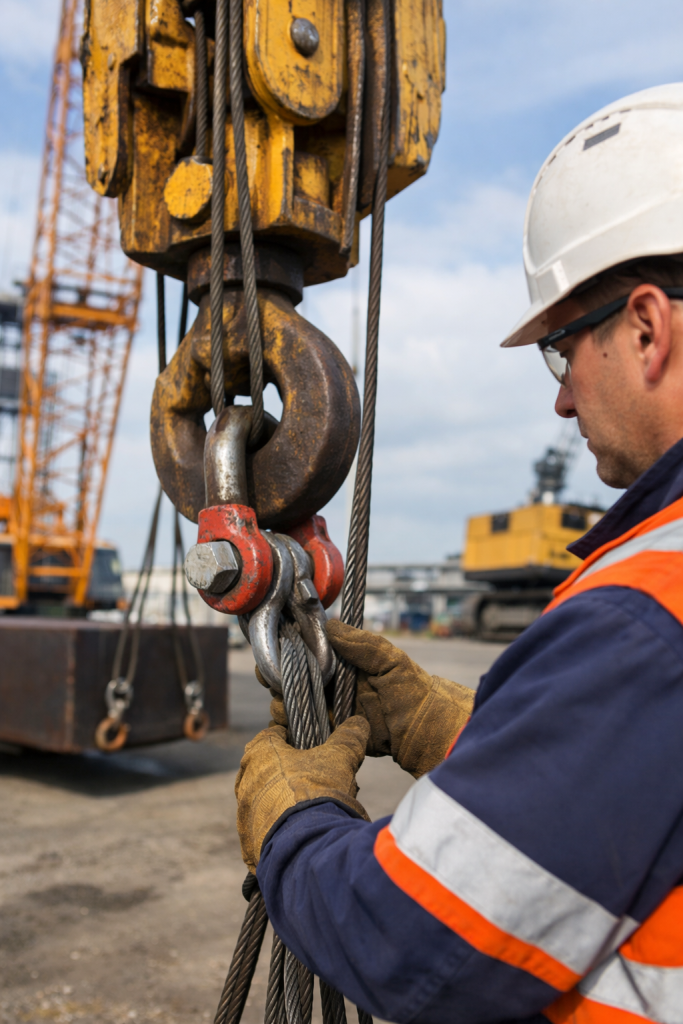
Wire ropes are essential components in the lifting and hoisting industry. Their performance directly impacts operational efficiency, equipment longevity, and the safety of personnel. Understanding the proper selection, installation, maintenance, and inspection of wire ropes is critical for minimizing risks and ensuring reliable operation. This article discusses key safety considerations, focusing on wire rope construction, material properties, installation practices, lubrication, and inspection techniques. Wire Rope Selection and Construction Selecting the appropriate wire rope is the first step in ensuring safe lifting operations. Wire ropes are available in various constructions, such as 7×19, 6×36, and 1×19. Each construction offers different levels of flexibility, fatigue resistance, and wear characteristics. For example, a […]

リフティングおよびホイスト産業におけるワイヤーロープの安全性に関する考察 続きを読む »
モノシールとパッキンシール:主な違いと用途

Sealing technology is critical in maintaining equipment efficiency, preventing leaks, and ensuring long-term reliability. Among the most commonly used sealing solutions are Mono Seals and Packing Seals. Understanding their differences helps engineers and maintenance professionals select the right seal for their application. 1. Mono Seal A Mono Seal, also known as a single-lip seal, is a compact mechanical seal designed for high-performance sealing in rotating or reciprocating equipment. Key Features: Advantages: Typical Applications: 2. Packing Seal A Packing Seal, also known as gland packing, consists of braided or twisted material compressed into a stuffing box to prevent leakage around shafts or rods. Key Features: Advantages: Typical Applications: 3. Key Differences

モノシールとパッキンシール:主な違いと用途 続きを読む »

亜鉛メッキ鋼ワイヤーロープのサプライヤー:技術的評価と調達に関する考察

1. Introduction Galvanized steel wire rope is widely used in lifting, rigging, marine, construction, mining, and general industrial applications where corrosion resistance is required. Unlike uncoated carbon steel rope, galvanized rope features a zinc coating that protects the steel wires from oxidation and environmental degradation. For industrial buyers, selecting galvanized steel wire rope suppliers is not merely a price decision. It involves evaluating manufacturing capability, coating quality, mechanical performance, compliance with standards, and long-term reliability. This article provides a technical framework for assessing suppliers from an engineering and procurement perspective. 2. What Is Galvanized Steel Wire Rope? Galvanized steel wire rope is produced by coating steel wires with zinc before

亜鉛メッキ鋼ワイヤーロープのサプライヤー:技術的評価と調達に関する考察 続きを読む »

クレーン鋼ワイヤロープ:構造、力学、工学的選択の原則

1. Introduction Crane steel wire rope is a critical load-bearing component in lifting systems. In overhead cranes, gantry cranes, tower cranes, and offshore lifting equipment, the wire rope functions as the primary tensile member transferring loads between the hoisting drum and the hook assembly. Unlike rigid lifting components, steel wire rope offers flexibility combined with high tensile strength, fatigue resistance, and redundancy. Its structural design allows it to bend over sheaves and drums while maintaining load-carrying capacity under cyclic stress conditions. This article provides a technical overview of crane steel wire rope, focusing on construction, mechanical behavior, fatigue performance, safety factors, and engineering selection criteria. 2. Structural Composition of Steel

クレーン鋼ワイヤロープ:構造、力学、工学的選択の原則 続きを読む »

ベアリングの潤滑 オイル vs グリース:技術的・工学的観点から

1. Introduction Bearing reliability is fundamentally linked to lubrication performance. Industry data consistently shows that a significant percentage of premature bearing failures are lubrication-related—caused by improper lubricant type, contamination, insufficient film thickness, or thermal degradation. One of the most critical decisions in rotating equipment design and maintenance is whether to use lubrication oil or grease. While both serve the same fundamental purpose—reducing friction and wear—their behavior, performance envelope, and maintenance implications differ substantially. This article provides a technical comparison based on lubrication theory, thermal management, contamination control, speed capability, and engineering selection criteria. 2. Lubrication Fundamentals Both oil and grease aim to form an elastohydrodynamic lubrication (EHL) film between rolling

ベアリングの潤滑 オイル vs グリース:技術的・工学的観点から 続きを読む »

シングルリップとダブルリップの比較:汚染防止と圧力処理

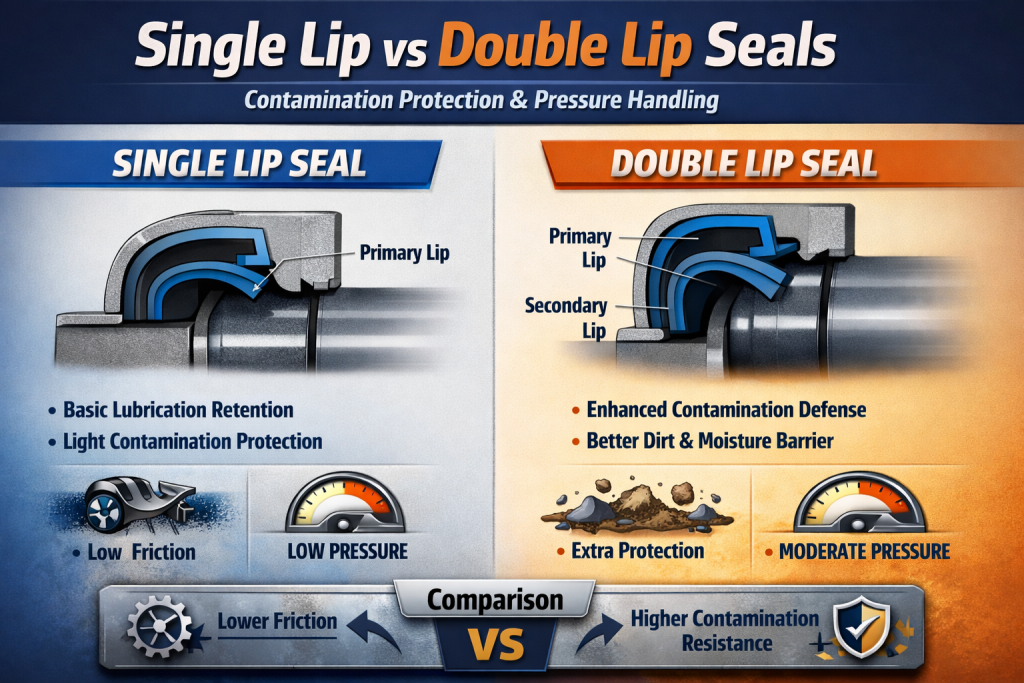
In industrial machinery, selecting the correct sealing solution directly impacts equipment reliability, leakage control, and contamination protection. Two widely used radial sealing designs are single lip seals and double lip seals. While both are designed to retain lubrication and exclude contaminants, their structural differences significantly affect performance in pressure and dirty environments. Understanding these differences helps engineers optimize sealing systems for hydraulic, pneumatic, and rotating applications. 1. Structural Differences Single Lip Seal A single lip seal features one primary sealing edge that contacts the shaft or rod surface. It is primarily designed to: Single lip designs are simpler, generate less heat, and are suitable for clean operating conditions. Double Lip

シングルリップとダブルリップの比較:汚染防止と圧力処理 続きを読む »

OEMベアリングのカスタマイズ:エンジニアが知っておくべきこと

現代の産業機器では、標準ベアリングが特殊な用途の性能、耐久性、または寸法要件を常に満たすわけではありません。OEMベアリングのカスタマイズにより、エンジニアは正確な運用ニーズに応じて、荷重容量、速度性能、環境耐性、サービス寿命を最適化できます。カスタマイズされたベアリングの背後にあるエンジニアリングの考慮事項を理解することで、信頼性、コスト効率、長期的な設備性能を確保できます。 1. 標準ベアリングでは不十分な場合 OEMカスタマイズは、設備が次の条件下で動作する場合に通常必要です:そのような場合、内部設計、材料、または表面処理を変更することで、性能を劇的に向上させることができます。 2. 荷重と用途の分析 ベアリングをカスタマイズする前に、エンジニアは次を評価する必要があります:正確な荷重計算は、内部ジオメトリ、転がり要素のサイズ、およびケージデザインを決定します。.

OEMベアリングのカスタマイズ:エンジニアが知っておくべきこと 続きを読む »

ワイヤーロープ交換によるダウンタイムの削減

Wire rope replacement is an unavoidable part of maintaining cranes, hoists, winches, and other lifting systems. However, unplanned or poorly managed replacement can lead to extended downtime, production delays, and increased labor costs. By implementing strategic engineering, monitoring, and maintenance practices, industrial facilities can significantly reduce downtime associated with wire rope replacement. 1. Understand the Root Causes of Premature Replacement Before optimizing replacement procedures, it is essential to identify why wire ropes are being replaced frequently. Common causes include: Addressing root causes extends rope service life and reduces replacement frequency. 2. Select the Correct Wire Rope for the Application Choosing the appropriate wire rope design dramatically impacts durability: Application-specific selection

ワイヤーロープ交換によるダウンタイムの削減 続きを読む »

重加工工場向け高強度ワイヤロープソリューション

Heavy fabrication plants operate under extreme load conditions, handling oversized steel structures, pressure vessels, bridge components, and industrial modules. In these demanding environments, high-strength wire rope solutions are critical for ensuring lifting safety, load stability, and operational efficiency. Selecting the right wire rope construction, material grade, and maintenance strategy directly impacts productivity and long-term equipment reliability. 1. Operational Demands in Heavy Fabrication Fabrication facilities typically involve: These applications require wire ropes that can withstand high static loads, dynamic shock loading, repetitive bending, and abrasive contact with drums and sheaves. 2. Key Characteristics of High-Strength Wire Rope To perform reliably in fabrication plants, wire ropes must offer: Optimized rope construction improves

重加工工場向け高強度ワイヤロープソリューション 続きを読む »

設計から配備まで:長寿命の産業用部品の構築

Creating industrial components that last requires more than simply using durable materials. Long-life components are the result of careful engineering, rigorous testing, and proper deployment strategies. From initial design to installation and ongoing maintenance, each stage affects the reliability, performance, and service life of machinery in industrial environments. 1. Design Stage: Engineering for Longevity The foundation of long-life components begins with robust design: 2. Prototyping and Testing Before mass production, components must be validated: Testing ensures the design translates into reliable, real-world performance. 3. Manufacturing Stage: Quality and Precision Consistent, high-quality production is critical: A strong manufacturing process ensures components meet design specifications. 4. Deployment and Installation Proper installation is

設計から配備まで:長寿命の産業用部品の構築 続きを読む »

jaJapanese