
業界インサイト

亜鉛メッキ鋼ワイヤーロープのサプライヤー:技術的評価と調達に関する考察

1. Introduction Galvanized steel wire rope is widely used in lifting, rigging, marine, construction, mining, and general industrial applications where corrosion resistance is required. Unlike uncoated carbon steel rope, galvanized rope features a zinc coating that protects the steel wires from oxidation and environmental degradation. For industrial buyers, selecting galvanized steel wire rope suppliers is not merely a price decision. It involves evaluating manufacturing capability, coating quality, mechanical performance, compliance with standards, and long-term reliability. This article provides a technical framework for assessing suppliers from an engineering and procurement perspective. 2. What Is Galvanized Steel Wire Rope? Galvanized steel wire rope is produced by coating steel wires with zinc before […]

亜鉛メッキ鋼ワイヤーロープのサプライヤー:技術的評価と調達に関する考察 続きを読む »
設計から配備まで:長寿命の産業用部品の構築

Creating industrial components that last requires more than simply using durable materials. Long-life components are the result of careful engineering, rigorous testing, and proper deployment strategies. From initial design to installation and ongoing maintenance, each stage affects the reliability, performance, and service life of machinery in industrial environments. 1. Design Stage: Engineering for Longevity The foundation of long-life components begins with robust design: 2. Prototyping and Testing Before mass production, components must be validated: Testing ensures the design translates into reliable, real-world performance. 3. Manufacturing Stage: Quality and Precision Consistent, high-quality production is critical: A strong manufacturing process ensures components meet design specifications. 4. Deployment and Installation Proper installation is

設計から配備まで:長寿命の産業用部品の構築 続きを読む »

24時間365日の産業運転に対応する信頼性の高いコンポーネントの設計

Industrial equipment that operates continuously, such as production lines, mining machinery, or processing plants, demands components engineered for maximum reliability, minimal downtime, and long service life. Designing components for 24/7 operation involves careful selection of materials, tolerance management, lubrication, sealing, and monitoring systems to withstand constant mechanical, thermal, and environmental stress. 1. Understanding Continuous Operation Requirements Components in round-the-clock industrial machinery must withstand: Reliability engineering focuses on anticipating these stresses and designing components that maintain performance under such conditions. 2. Material Selection for High-Durability Components Materials must resist wear, corrosion, and fatigue: Choosing the right material combination ensures components endure extended duty cycles without frequent replacement. 3. Precision Engineering and

24時間365日の産業運転に対応する信頼性の高いコンポーネントの設計 続きを読む »

産業機械のメンテナンス・コストを削減する方法

Maintenance costs are a significant portion of operating expenses in industrial operations. Unexpected downtime, frequent part replacements, and inefficient maintenance practices can drastically reduce productivity and profitability. By implementing strategic engineering, preventive practices, and data-driven maintenance, manufacturers can minimize costs while maximizing equipment reliability and lifespan. 1. Implement Preventive Maintenance Programs Preventive maintenance focuses on regularly scheduled inspections and servicing before failures occur: Preventive maintenance reduces the likelihood of costly emergency repairs and unplanned downtime. 2. Use High-Quality Components Investing in durable, industrial-grade components reduces replacement frequency: While upfront costs may be higher, the extended service life reduces total lifecycle costs. 3. Optimize Lubrication Practices Proper lubrication prevents friction-related wear

産業機械のメンテナンス・コストを削減する方法 続きを読む »

大型リフティング機器の工学的考察

Heavy-duty lifting equipment, such as cranes, hoists, and excavators, plays a critical role in construction, mining, shipping, and industrial operations. Designing and maintaining these machines requires a deep understanding of load dynamics, material selection, safety standards, and component reliability. Proper engineering considerations ensure operational efficiency, extend equipment lifespan, and prevent catastrophic failures. 1. Understanding Load Dynamics Heavy-duty lifting equipment experiences a variety of forces: Accurate calculation of these loads is essential to avoid over-stressing mechanical components, especially wire ropes, bearings, and hydraulic systems. 2. Structural Integrity The main frame, boom, and support structures must withstand repeated stress cycles without deformation. Key engineering considerations include: Structural integrity directly impacts operator safety

大型リフティング機器の工学的考察 続きを読む »

重要産業部品のライフサイクルコスト分析:ダウンタイムリスクを低減する戦略

材料構造と荷重メカニズム スチールワイヤーロープは、高強度スチールワイヤーを撚り合わせてストランドを形成し、コアの周りに螺旋状に配置されています。荷重は金属ワイヤーに分散され、構造的剛性と高い

重要産業部品のライフサイクルコスト分析:ダウンタイムリスクを低減する戦略 続きを読む »

標準部品からカスタマイズ・ソリューションまで:工業用シールのエンジニアリングの道

In industrial systems, seals are often overlooked as “commodity parts”—standard O-rings, gaskets, or lip seals selected from a catalog. However, as industries push for higher pressures, extreme temperatures, aggressive chemicals, and precise tolerances, standard components frequently fall short. The engineering challenge then becomes: how to transform standard seals into fully customized solutions that meet specific operational demands. This article explores the systematic path from standard components to bespoke industrial seals, highlighting design principles, material science considerations, and integration strategies. Understanding the limitations of standard seals Standard seals are designed to satisfy general industrial applications. Their advantages include: However, in demanding environments, standard seals often fail due to: Recognizing these limitations

標準部品からカスタマイズ・ソリューションまで:工業用シールのエンジニアリングの道 続きを読む »

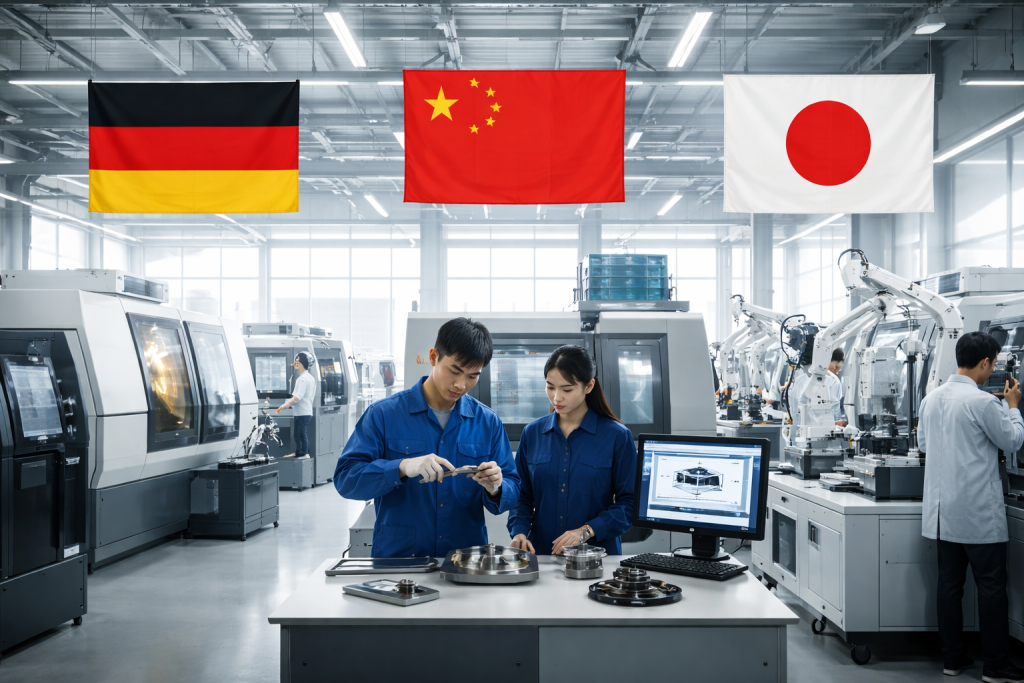
中国の精密製造はドイツと日本に挑戦できるか?

1. Introduction: A New Landscape of Global Manufacturing For decades, Germany and Japan have been widely regarded as the world’s leaders in precision manufacturing. Their reputations rest on deep engineering traditions, high-quality industrial standards, advanced machine tools, and highly skilled workforces. Companies such as Siemens, Bosch, FANUC, NSK, DMG Mori, Mazak, and Mitutoyo have long symbolized reliability, innovation, and long-term technological mastery. China’s rise as a manufacturing powerhouse was initially associated more with mass production, cost efficiency, and industrial scale than with ultra-precision engineering. However, over the past 15 to 20 years, this perception has shifted significantly. China has invested heavily in high-end manufacturing, automation, advanced materials, digital factories, and

中国の精密製造はドイツと日本に挑戦できるか? 続きを読む »

jaJapanese