wonzh

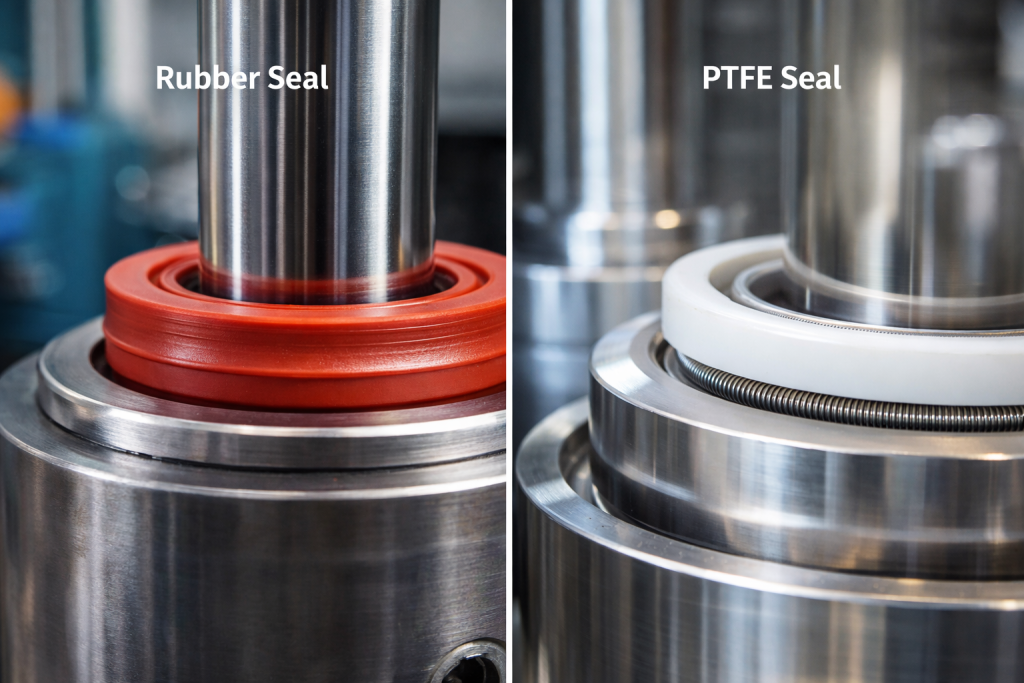
Rubber Seal vs PTFE Seal: Which Material Is Right for Your System?

In industrial hydraulic and pneumatic systems, sealing performance directly determines system efficiency, leakage control, maintenance frequency, and equipment lifespan. Among various sealing materials, rubber-based seals and PTFE (Polytetrafluoroethylene) seals are two of the most widely used options. Although both serve the same fundamental function—preventing fluid or gas leakage—their material properties, operating limits, and long-term behavior […]

Rubber Seal vs PTFE Seal: Which Material Is Right for Your System? Read More »

Galvanized Wire Rope vs Stainless Steel Wire Rope: Durability and Cost Comparison

In industrial applications ranging from construction and lifting systems to marine and architectural installations, choosing the right type of wire rope is critical for performance, longevity, and lifecycle cost. Two common options are galvanized wire rope and stainless steel wire rope, each with distinct characteristics, advantages, and cost structures. What Are They? Galvanized wire rope

Galvanized Wire Rope vs Stainless Steel Wire Rope: Durability and Cost Comparison Read More »

Steel Wire Rope vs Synthetic Fiber Rope: Which Is Better for Heavy Lifting?

In heavy lifting operations such as mining, construction, offshore platforms, and port handling systems, selecting the appropriate lifting medium directly affects safety, operational efficiency, and lifecycle cost. The two dominant solutions in the market are steel wire rope and synthetic fiber rope. Although both are used for load-bearing applications, their mechanical properties, durability profiles, and

Steel Wire Rope vs Synthetic Fiber Rope: Which Is Better for Heavy Lifting? Read More »

Hygienic Seals in Sanitary Processing Systems: Engineering Principles, Material Selection, and Compliance Standards

Hygienic seals are critical components in industries where contamination control, cleanability, and regulatory compliance are non-negotiable. In food processing, pharmaceuticals, biotechnology, dairy production, and beverage manufacturing, sealing systems must prevent leakage while maintaining strict sanitary integrity. Unlike conventional industrial seals, hygienic seals are engineered specifically to eliminate microbial growth risks, withstand aggressive cleaning cycles, and

Hygienic Seals in Sanitary Processing Systems: Engineering Principles, Material Selection, and Compliance Standards Read More »

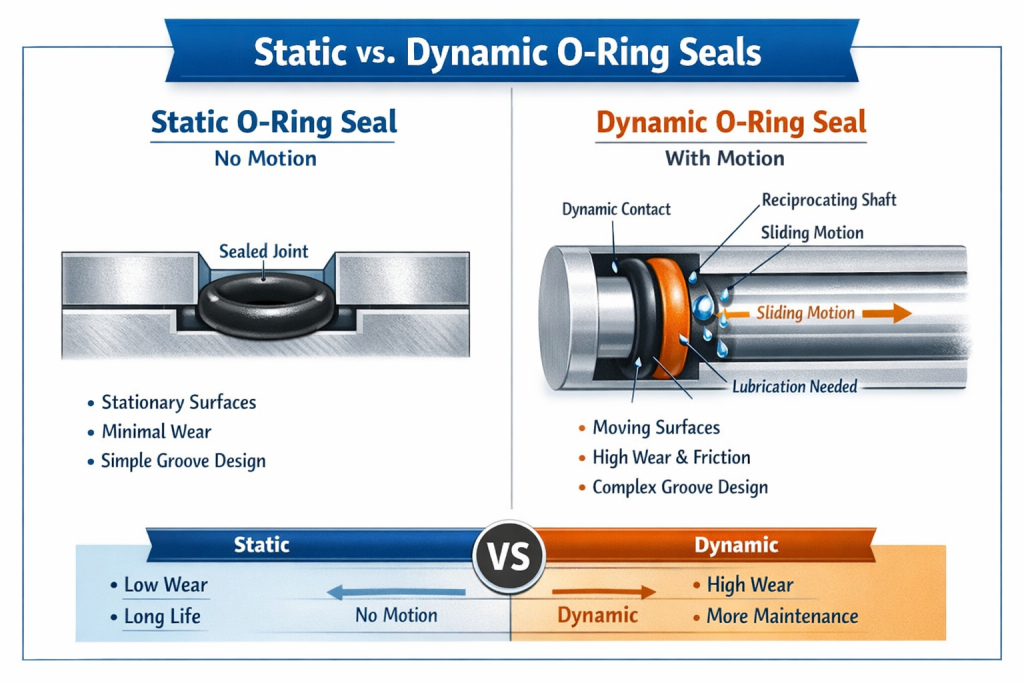
What Is the Difference Between Static and Dynamic O-Ring Seals?

O-rings are among the most widely used sealing elements in industrial equipment due to their simplicity, reliability, and cost-effectiveness. However, their performance depends heavily on whether they are used in static or dynamic applications. Understanding the difference is essential for proper material selection, groove design, and long-term reliability. 1. What Is a Static O-Ring Seal?

What Is the Difference Between Static and Dynamic O-Ring Seals? Read More »

Lifecycle Cost Analysis of Critical Industrial Components: Strategies to Reduce Downtime Risk

Critical components in industrial machinery—such as bearings, shafts, seals, and gearboxes—play a decisive role in operational efficiency, safety, and reliability. Downtime caused by component failure can lead to significant financial loss, production delays, and safety hazards. Conducting a full lifecycle cost (LCC) analysis enables engineers and managers to make informed decisions about procurement, maintenance, and

Lifecycle Cost Analysis of Critical Industrial Components: Strategies to Reduce Downtime Risk Read More »

How Surface Treatments of Shafts Affect Fatigue Life: Engineering Comparison of Nitriding and Carburizing

Shafts are fundamental components in rotating and reciprocating machinery, transmitting torque, supporting loads, and ensuring precise alignment. Fatigue failure is one of the most common causes of shaft breakdown, often initiating at the surface due to repeated stress cycles. Surface treatments, such as nitriding and carburizing, are widely applied to enhance fatigue life by improving

How Surface Treatments of Shafts Affect Fatigue Life: Engineering Comparison of Nitriding and Carburizing Read More »

Vibration Control in High-Speed Rotating Equipment: Engineering Impacts of Bearings and Misalignment

High-speed rotating equipment, including pumps, compressors, turbines, and industrial motors, is widely used in manufacturing, energy, and process industries. Vibration control is critical for ensuring operational stability, extending equipment life, and preventing catastrophic failures. Bearings and shaft alignment play a central role in managing vibration levels. 1. Sources of Vibration in High-Speed Equipment Vibration in

Vibration Control in High-Speed Rotating Equipment: Engineering Impacts of Bearings and Misalignment Read More »

Mechanical Seals vs. Packing Seals: Cost Comparison and Suitability for Continuous-Running Equipment

Sealing solutions are critical in pumps, compressors, and other rotating machinery. The choice between mechanical seals and traditional packing (gland) seals affects equipment reliability, maintenance costs, and operational efficiency. For continuous-running industrial equipment, selecting the most appropriate sealing technology requires careful consideration of performance, lifespan, and total cost of ownership. Understanding Mechanical Seals and Packing

Mechanical Seals vs. Packing Seals: Cost Comparison and Suitability for Continuous-Running Equipment Read More »

Five Engineering Causes of Early Wire Rope Failure and Their Solutions

Wire ropes are critical components in heavy machinery, lifting equipment, maritime systems, and mining transport. Their safety directly affects operational efficiency and personnel safety. However, early wire rope failures are still common in practice. Understanding the engineering causes helps extend service life and improve equipment reliability. 1. Overload and Impact Loads When the tension on

Five Engineering Causes of Early Wire Rope Failure and Their Solutions Read More »

en_USEnglish