wonzh

Durability Design of Motor Bearings and Couplings in Air Compressors

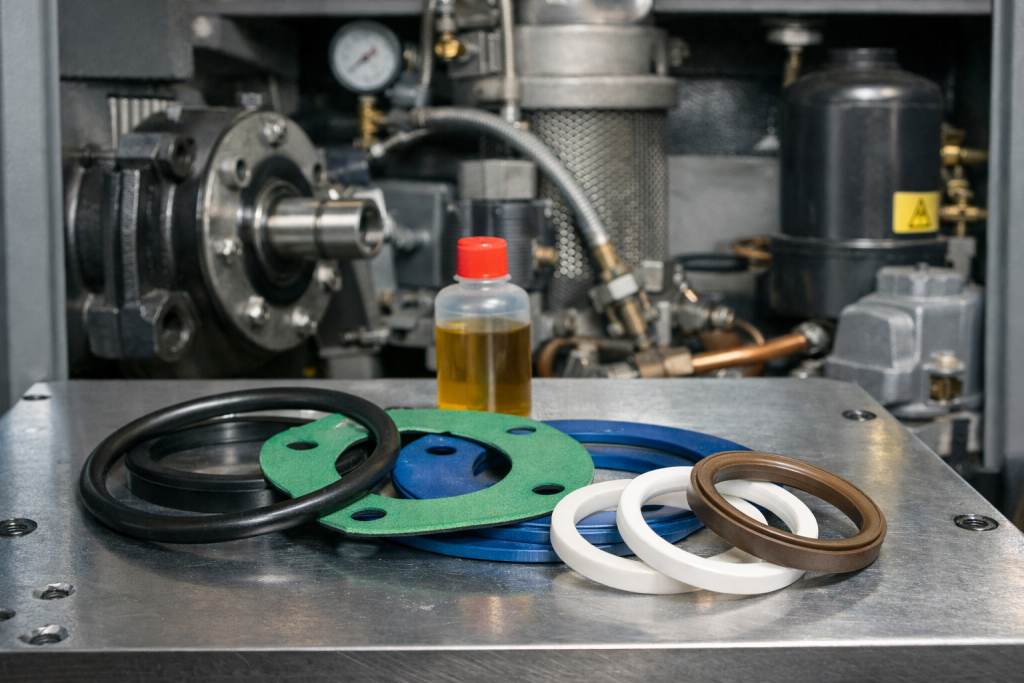
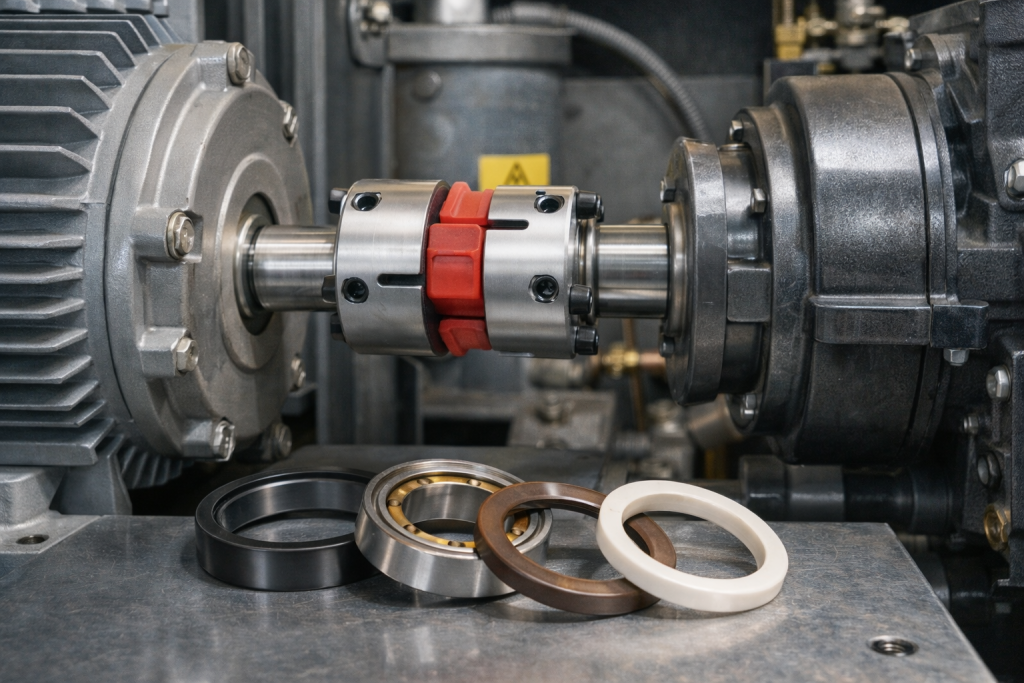
Air compressors rely on the precise coordination between the motor and the compression unit to deliver consistent and efficient performance. Two critical components in this system are the motor bearings and couplings, which transmit rotational motion while supporting axial and radial loads. Ensuring their durability is essential to reduce downtime, maintenance costs, and energy losses, […]

Durability Design of Motor Bearings and Couplings in Air Compressors Read More »
Material Selection and Applications of Exhaust Valve Seals in Air Compressors

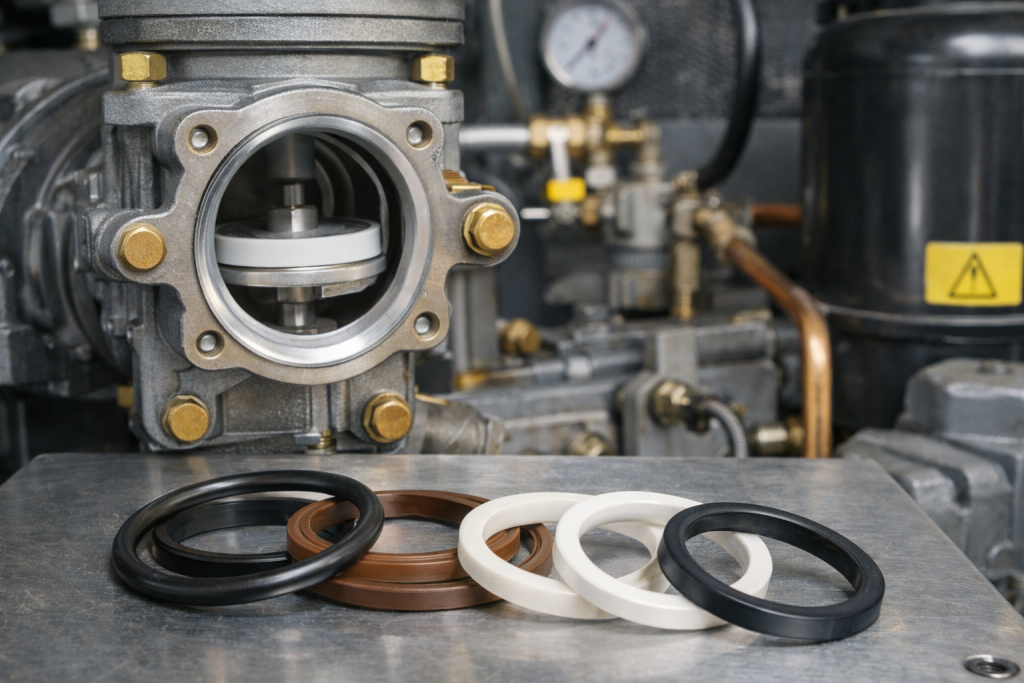
Exhaust valves are critical components in air compressors, controlling the release of compressed air while maintaining system pressure and efficiency. The sealing elements within these valves play a vital role in preventing air leakage, reducing energy loss, and ensuring reliable operation over long-term service. Choosing the appropriate seal material for exhaust valves is essential, as

Material Selection and Applications of Exhaust Valve Seals in Air Compressors Read More »

Strategies for Extending the Service Life of Seals and Gaskets in Long-Running Air Compressors

Air compressors are essential components in industrial facilities, providing pressurized air for pneumatic tools, process automation, and control systems. During long-term operation, seals and gaskets play a critical role in maintaining pressure integrity, preventing air leakage, and ensuring the efficiency of the system. However, these components are often exposed to high pressures, fluctuating temperatures, chemical

Strategies for Extending the Service Life of Seals and Gaskets in Long-Running Air Compressors Read More »

Difference Between Static and Dynamic Seals: An Engineering Perspective

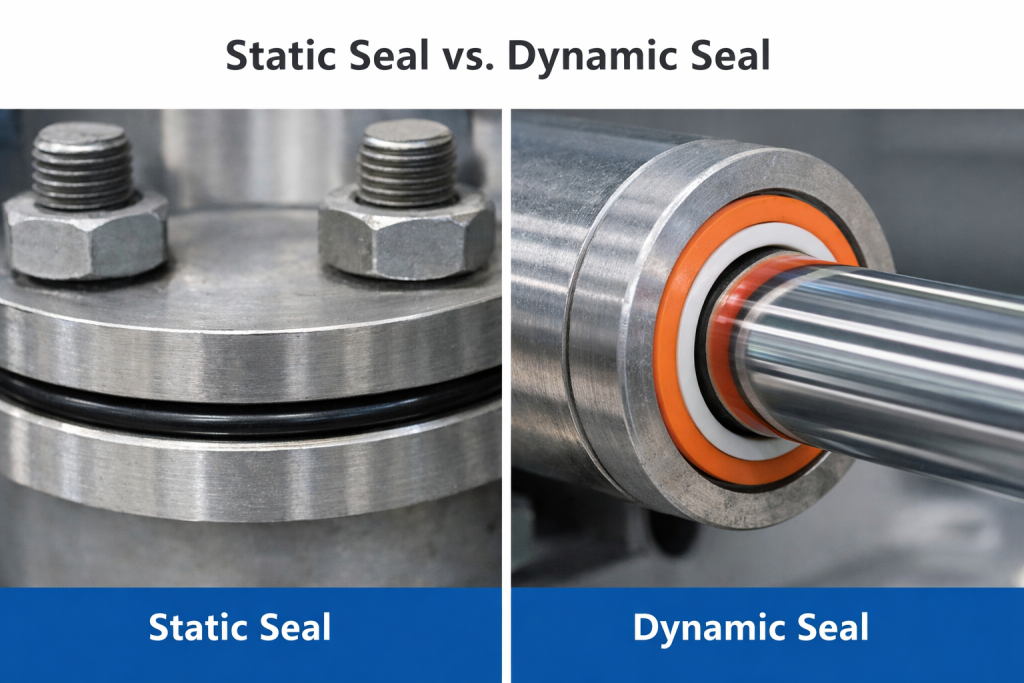
Sealing technology is fundamental to modern mechanical systems. From hydraulic cylinders and pumps to aerospace actuators, chemical reactors, and precision instruments, seals determine whether equipment operates reliably, efficiently, and safely. Among all sealing solutions, static seals and dynamic seals represent two major categories with fundamentally different design principles, working conditions, and failure mechanisms. Understanding their

Difference Between Static and Dynamic Seals: An Engineering Perspective Read More »

Precision Machining and Wear-Resistant Applications of Industrial Robot Joint Shafts

Industrial robots are increasingly integrated into modern manufacturing, assembly lines, and logistics operations. The performance, precision, and reliability of these robots largely depend on the design and quality of their joint shafts. As critical load-bearing and motion-transmitting components, joint shafts must maintain high dimensional accuracy, withstand repetitive motion cycles, and resist wear caused by friction,

Precision Machining and Wear-Resistant Applications of Industrial Robot Joint Shafts Read More »

Corrosion-Resistant Strategies for Drive Shafts in Food Processing Machinery

Food processing machinery operates in environments that are inherently corrosive and hygienically demanding. Components such as mixers, conveyors, extruders, and pumps are continuously exposed to water, acidic or alkaline cleaning solutions, salt, and food ingredients. Among these components, drive shafts are critical, transmitting rotational power from motors to equipment while maintaining precise alignment and torque.

Corrosion-Resistant Strategies for Drive Shafts in Food Processing Machinery Read More »

Pressure-Resistant Design of Bearings and Transmission Components in Deep-Sea Mining Equipment

Deep-sea mining represents one of the most challenging environments for mechanical engineering. Equipment such as subsea drills, hydraulic manipulators, and seabed excavation vehicles must operate at depths exceeding 3,000 meters, where hydrostatic pressures can surpass 30 MPa, temperatures are near freezing, and seawater presents highly corrosive and abrasive conditions. In these applications, bearings and transmission

Pressure-Resistant Design of Bearings and Transmission Components in Deep-Sea Mining Equipment Read More »

Hygienic Seal Selection Logic in Food and Pharmaceutical Equipment

In food processing and pharmaceutical manufacturing, maintaining product purity, process safety, and regulatory compliance is paramount. Hygienic seals are critical components that prevent contamination, maintain pressure integrity, and ensure the operational reliability of pumps, mixers, valves, and filling machines. Selecting the right seal for sanitary applications is a complex task that requires understanding the interplay

Hygienic Seal Selection Logic in Food and Pharmaceutical Equipment Read More »

Engineering Pathways for High-Temperature, High-Pressure Seals in Oil Drilling and Production Equipment

Oil and gas drilling and production operations involve some of the most extreme environments encountered in industrial engineering. Drill strings, blowout preventers (BOPs), subsea Christmas trees, and high-pressure valves routinely operate under temperatures exceeding 150°C and pressures surpassing 100 MPa. In these conditions, sealing systems are not mere components—they are critical safety and reliability elements

Engineering Pathways for High-Temperature, High-Pressure Seals in Oil Drilling and Production Equipment Read More »

Material and Structural Innovations in Pressure-Resistant Seals for Deep-Sea Equipment

Deep-sea environments represent one of the most extreme operating conditions for engineering systems. At depths of 3,000 to 6,000 meters, hydrostatic pressure can exceed 30 to 60 megapascals, accompanied by low temperatures, corrosive seawater, and limited maintenance accessibility. In this context, sealing systems are not merely auxiliary components; they are mission-critical barriers that determine whether

Material and Structural Innovations in Pressure-Resistant Seals for Deep-Sea Equipment Read More »

en_USEnglish