
Seals are vital components in mechanical systems, preventing fluid leakage, maintaining pressure, and ensuring operational safety. They are broadly categorized into static seals, which remain stationary relative to the mating surface, and dynamic seals, which operate under motion. Each type faces unique failure modes, and understanding these differences is crucial for maintenance planning, material selection, and system reliability.
1. Static Seals: Failure Modes and Causes
Static seals are installed in components where there is no relative movement between the seal and the mating surface, such as flange gaskets, O-rings in static grooves, or valve stem collars. Common failure modes include:
- Compression Set: Over time, elastomers or polymer seals can lose elasticity under constant compression, leading to permanent deformation and leakage.
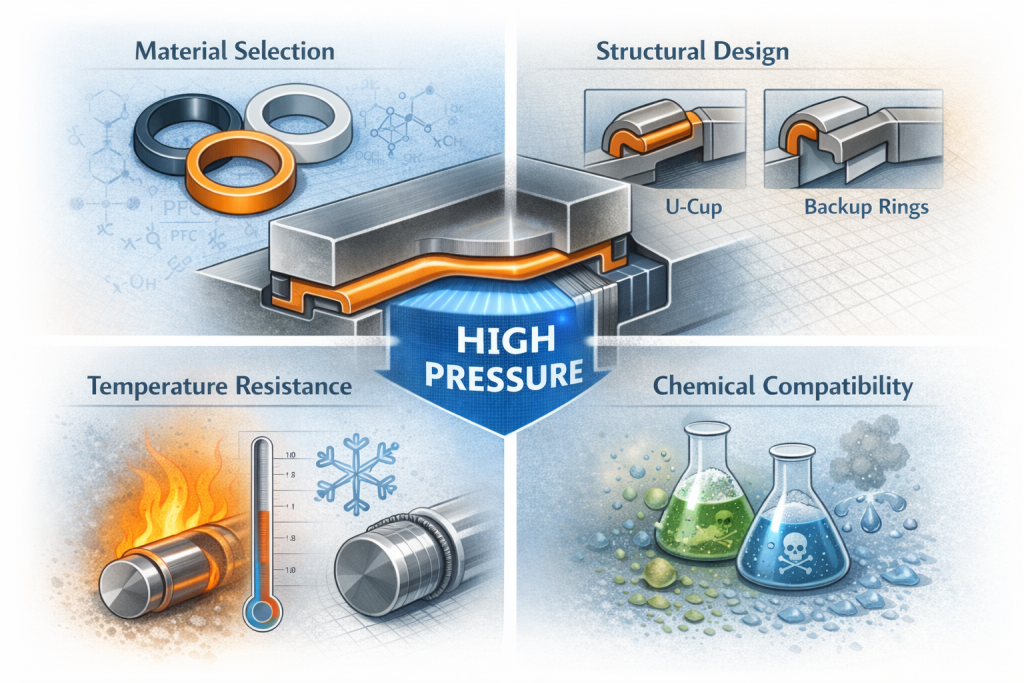
- Extrusion: Excessive pressure can push seal material into gaps, especially if the groove design is insufficient, causing leaks or mechanical damage.
- Chemical Degradation: Exposure to incompatible fluids may cause swelling, hardening, cracking, or embrittlement.
- Thermal Aging: Prolonged exposure to extreme temperatures can harden or soften seal materials, compromising sealing performance.
Mitigation Strategies: Proper material selection, groove design, and chemical compatibility testing are essential to extend static seal life.
2. Dynamic Seals: Failure Modes and Causes
Dynamic seals function where there is relative motion between the seal and the mating surface, such as piston seals, rod seals, or rotary shaft seals. Their failure modes are more complex due to friction, motion, and environmental exposure:
- Abrasion and Wear: Continuous contact with moving surfaces causes material loss over time.
- Thermal Degradation: Friction generates heat, which can locally degrade the seal material.
- Leakage from Misalignment: Shaft runout, piston wobble, or uneven surfaces can reduce sealing effectiveness.
- Contamination Damage: Particles or debris trapped between seal and surface accelerate wear and can cause scratches or scoring.
- Creep or Extrusion: Pressure and motion can cause progressive deformation, particularly in softer materials.
Mitigation Strategies: Use low-friction materials, optimize surface finishes, implement lubrication, ensure proper alignment, and carefully design seal preload and clearances.
3. Material Considerations
- Static Seals: Elastomers, PTFE, or composite materials with high compression set resistance and chemical stability are ideal.
- Dynamic Seals: Materials must balance wear resistance, elasticity, and low friction, such as polyurethane, PTFE, or reinforced composites.
4. Operational Factors
- Static Seals: High pressure, chemical exposure, and temperature extremes dominate performance.
- Dynamic Seals: Speed, pressure, friction, surface finish, alignment, and lubrication significantly affect lifespan.
5. Inspection and Maintenance
- Static Seals: Periodic visual inspection for leaks, hardness, and cracking is generally sufficient.
- Dynamic Seals: More frequent inspection is needed to monitor wear, heat buildup, and lubrication integrity. Predictive maintenance tools, like vibration or temperature sensors, can improve reliability.
6. Key Takeaways
- Static seals fail primarily due to material degradation, compression, and chemical attack.
- Dynamic seals fail mainly due to frictional wear, heat, misalignment, and contamination.
- Designing reliable sealing systems requires understanding operational conditions, proper material selection, and preventive maintenance strategies.
By recognizing the differences between static and dynamic seal failure modes, engineers can reduce downtime, improve safety, and extend equipment service life. Proper design, installation, and maintenance practices are essential for achieving optimal performance in any industrial application.
 English
  Korean
  Japanese
  Russian
  Arabic
  Spanish
  German
  French
  Italian
  Portuguese
  Chinese
  Dutch
Dutch  Polish
  Czech
Czech  Hungarian
  Finnish
  Swedish
  Vietnamese
  Thai
Thai  Turkish