アプリケーション&ソリューション

サニタリー処理システムにおける衛生的シール:工学的原理、材料選択、コンプライアンス基準

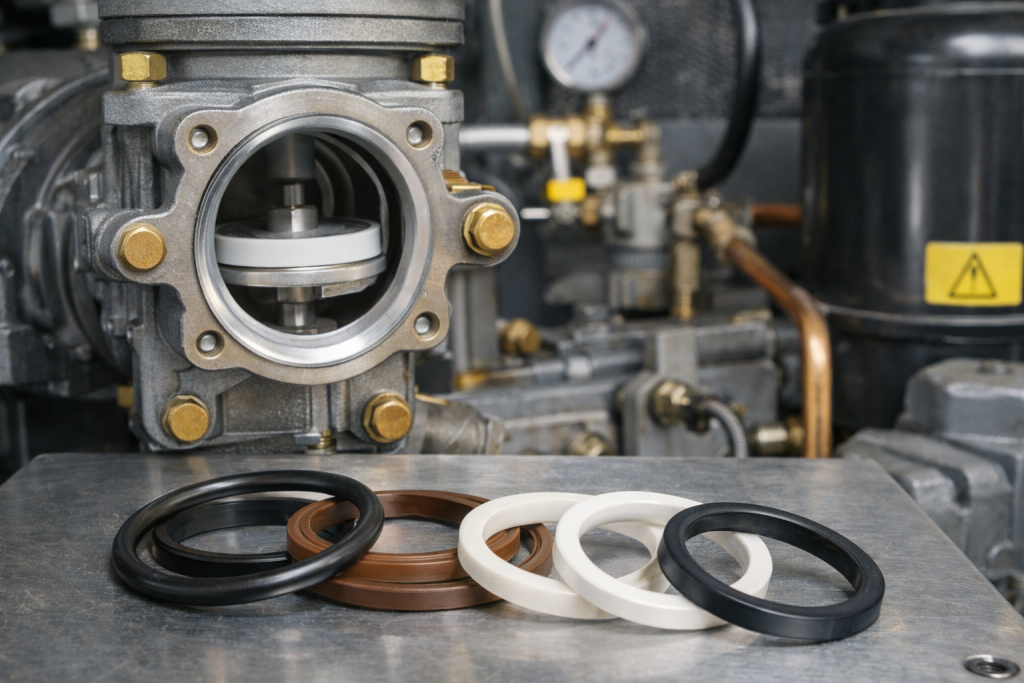
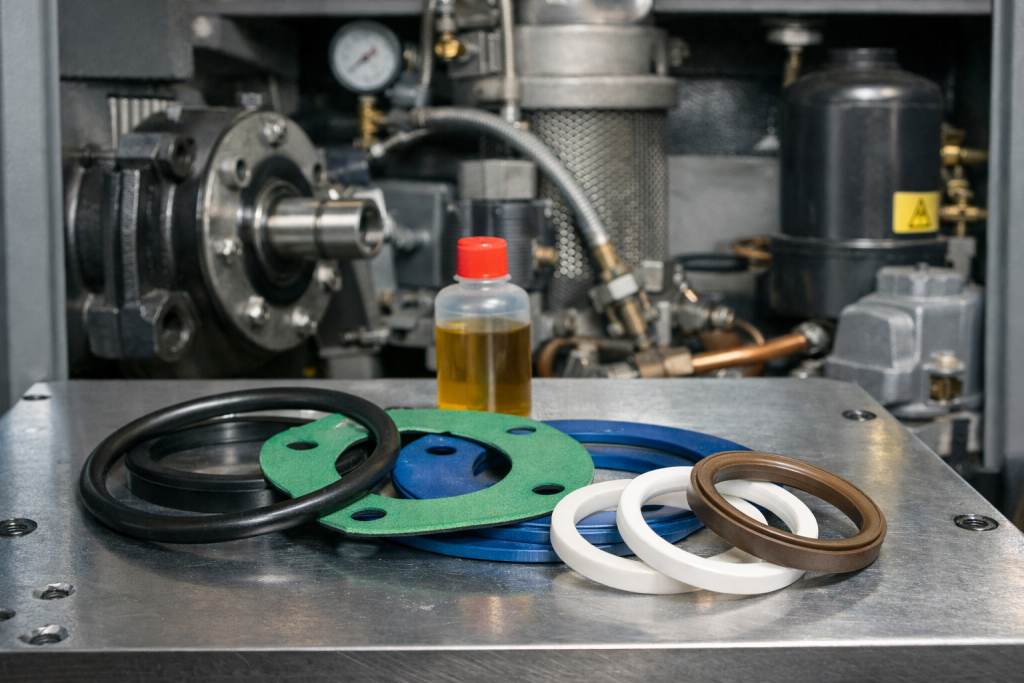
Hygienic seals are critical components in industries where contamination control, cleanability, and regulatory compliance are non-negotiable. In food processing, pharmaceuticals, biotechnology, dairy production, and beverage manufacturing, sealing systems must prevent leakage while maintaining strict sanitary integrity. Unlike conventional industrial seals, hygienic seals are engineered specifically to eliminate microbial growth risks, withstand aggressive cleaning cycles, and comply with international sanitary standards. 1. What Are Hygienic Seals? Hygienic seals are elastomeric or polymer sealing elements designed for use in sanitary equipment where product purity and contamination prevention are essential. They are commonly installed in: Their primary function is to maintain a leak-tight barrier without creating dead zones, crevices, or surfaces that could […]

サニタリー処理システムにおける衛生的シール:工学的原理、材料選択、コンプライアンス基準 続きを読む »
ワイヤーロープ早期故障の5つの工学的原因とその解決策

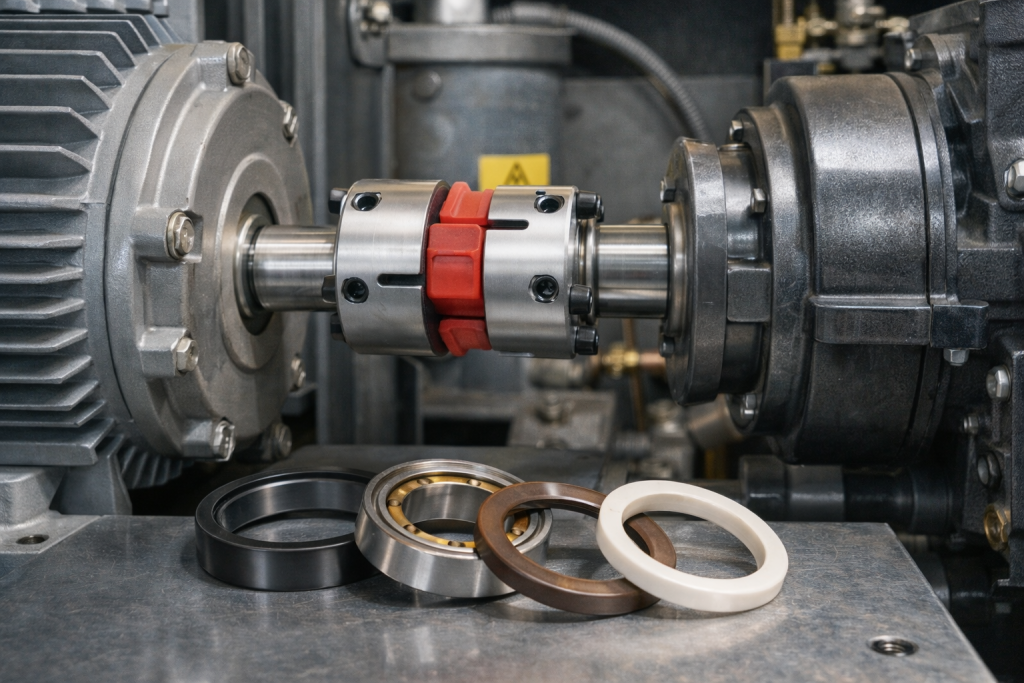
Wire ropes are critical components in heavy machinery, lifting equipment, maritime systems, and mining transport. Their safety directly affects operational efficiency and personnel safety. However, early wire rope failures are still common in practice. Understanding the engineering causes helps extend service life and improve equipment reliability. 1. Overload and Impact Loads When the tension on a wire rope exceeds its rated capacity, local plastic deformation or micro-cracks can occur, leading to premature failure. Sudden impact loads, such as those caused by abrupt lifting or stopping of heavy loads, can accelerate fatigue damage. Solutions: 2. Bending Fatigue and Contact Wear Frequent bending over sheaves, drums, or guide wheels causes bending fatigue.

ワイヤーロープ早期故障の5つの工学的原因とその解決策 続きを読む »

高圧ポンプシールの材料選択と漏れ最適化

High-pressure pumps are essential components in industrial applications such as chemical processing, oil and gas, water treatment, and hydraulic systems. The efficiency and reliability of these pumps largely depend on the performance of their sealing elements, which prevent fluid leakage, maintain system pressure, and protect mechanical components from damage. Choosing the right seal materials and optimizing design to minimize leakage are critical to ensuring operational efficiency and safety. Operational Challenges of High-Pressure Pump Seals Seals in high-pressure pumps face extreme conditions that challenge their performance: Understanding these challenges is essential for selecting materials and designing seals that maintain performance over time. Common Seal Materials The choice of seal material directly

高圧ポンプシールの材料選択と漏れ最適化 続きを読む »

エアコンプレッサーのモーターベアリングとカップリングの耐久性設計

Air compressors rely on the precise coordination between the motor and the compression unit to deliver consistent and efficient performance. Two critical components in this system are the motor bearings and couplings, which transmit rotational motion while supporting axial and radial loads. Ensuring their durability is essential to reduce downtime, maintenance costs, and energy losses, particularly in industrial compressors operating under continuous or high-demand conditions. Durability design involves careful material selection, engineering tolerances, surface treatments, lubrication, and monitoring strategies. Understanding the operating stresses and failure mechanisms of these components is key to achieving long-term reliability. Motor Bearings in Air Compressors Motor bearings are designed to support the rotor shaft, maintain

エアコンプレッサーのモーターベアリングとカップリングの耐久性設計 続きを読む »

エアコンプレッサーの排気弁シールの材料選択と用途

Exhaust valves are critical components in air compressors, controlling the release of compressed air while maintaining system pressure and efficiency. The sealing elements within these valves play a vital role in preventing air leakage, reducing energy loss, and ensuring reliable operation over long-term service. Choosing the appropriate seal material for exhaust valves is essential, as these components are exposed to high pressures, fluctuating temperatures, lubricants, and potential chemical contaminants. Understanding the material properties, operational requirements, and environmental conditions is key to designing exhaust valve seals that maximize performance and durability. Operational Challenges of Exhaust Valve Seals Exhaust valve seals face multiple stressors during operation: These challenges highlight the importance of

エアコンプレッサーの排気弁シールの材料選択と用途 続きを読む »

ロングランエアコンプレッサーのシールとガスケットの長寿命化戦略

Air compressors are essential components in industrial facilities, providing pressurized air for pneumatic tools, process automation, and control systems. During long-term operation, seals and gaskets play a critical role in maintaining pressure integrity, preventing air leakage, and ensuring the efficiency of the system. However, these components are often exposed to high pressures, fluctuating temperatures, chemical contaminants, and mechanical wear, all of which can compromise their performance and lifespan. Effective strategies for extending the service life of seals and gaskets require a combination of material selection, design optimization, maintenance practices, and operational monitoring. Understanding the challenges Seals and gaskets in air compressors face several challenges during continuous operation: If left unaddressed,

ロングランエアコンプレッサーのシールとガスケットの長寿命化戦略 続きを読む »

産業用ロボット関節シャフトの精密加工と耐摩耗用途

Industrial robots are increasingly integrated into modern manufacturing, assembly lines, and logistics operations. The performance, precision, and reliability of these robots largely depend on the design and quality of their joint shafts. As critical load-bearing and motion-transmitting components, joint shafts must maintain high dimensional accuracy, withstand repetitive motion cycles, and resist wear caused by friction, torque fluctuations, and environmental contaminants. Optimizing the precision and durability of robot joint shafts requires a multidisciplinary approach, combining advanced machining techniques, material science, surface engineering, and tribology. The functional importance of robot joint shafts A robot’s joint shaft serves as the rotational axis for its links, transmitting torque from motors to the connected arm

産業用ロボット関節シャフトの精密加工と耐摩耗用途 続きを読む »

食品加工機械におけるドライブシャフトの耐食戦略

Food processing machinery operates in environments that are inherently corrosive and hygienically demanding. Components such as mixers, conveyors, extruders, and pumps are continuously exposed to water, acidic or alkaline cleaning solutions, salt, and food ingredients. Among these components, drive shafts are critical, transmitting rotational power from motors to equipment while maintaining precise alignment and torque. Failure due to corrosion can lead to downtime, contamination, and costly maintenance. Ensuring the longevity and reliability of drive shafts in food processing requires a combination of material selection, surface engineering, protective coatings, and maintenance practices. Corrosion challenges in food processing environments Food processing environments present several corrosion challenges: Corrosion on drive shafts can manifest

食品加工機械におけるドライブシャフトの耐食戦略 続きを読む »

深海鉱山機械における軸受および伝動部品の耐圧設計

Deep-sea mining represents one of the most challenging environments for mechanical engineering. Equipment such as subsea drills, hydraulic manipulators, and seabed excavation vehicles must operate at depths exceeding 3,000 meters, where hydrostatic pressures can surpass 30 MPa, temperatures are near freezing, and seawater presents highly corrosive and abrasive conditions. In these applications, bearings and transmission components are critical elements that directly affect system reliability, operational efficiency, and safety. Designing these components to withstand extreme pressure requires a multidisciplinary approach, integrating materials science, tribology, structural mechanics, and system-level engineering. Challenges in deep-sea mechanical systems The primary challenges for bearings and transmission elements in deep-sea mining equipment arise from three factors: high

深海鉱山機械における軸受および伝動部品の耐圧設計 続きを読む »

食品・医薬品機器における衛生的シール選択の論理

In food processing and pharmaceutical manufacturing, maintaining product purity, process safety, and regulatory compliance is paramount. Hygienic seals are critical components that prevent contamination, maintain pressure integrity, and ensure the operational reliability of pumps, mixers, valves, and filling machines. Selecting the right seal for sanitary applications is a complex task that requires understanding the interplay between material properties, seal geometry, system pressure, temperature, chemical exposure, and cleanability. Misjudged seal selection can lead to microbial contamination, product recalls, downtime, or accelerated wear. Defining hygienic seals Hygienic or sanitary seals are designed specifically for applications where cleanliness, sterility, and process safety are critical. They typically operate under low to moderate pressure, often

食品・医薬品機器における衛生的シール選択の論理 続きを読む »

jaJapanese