
Wire ropes are critical components in lifting, hoisting, and industrial applications. The safety and reliability of operations depend on the integrity of the wire rope, making timely replacement essential. Determining when a wire rope has reached the end of its service life requires a comprehensive evaluation of visible damage, operational history, environmental conditions, and manufacturer guidelines. Failure to replace worn wire ropes can lead to catastrophic accidents, equipment damage, and operational downtime.
Visual Inspection and Broken Wires
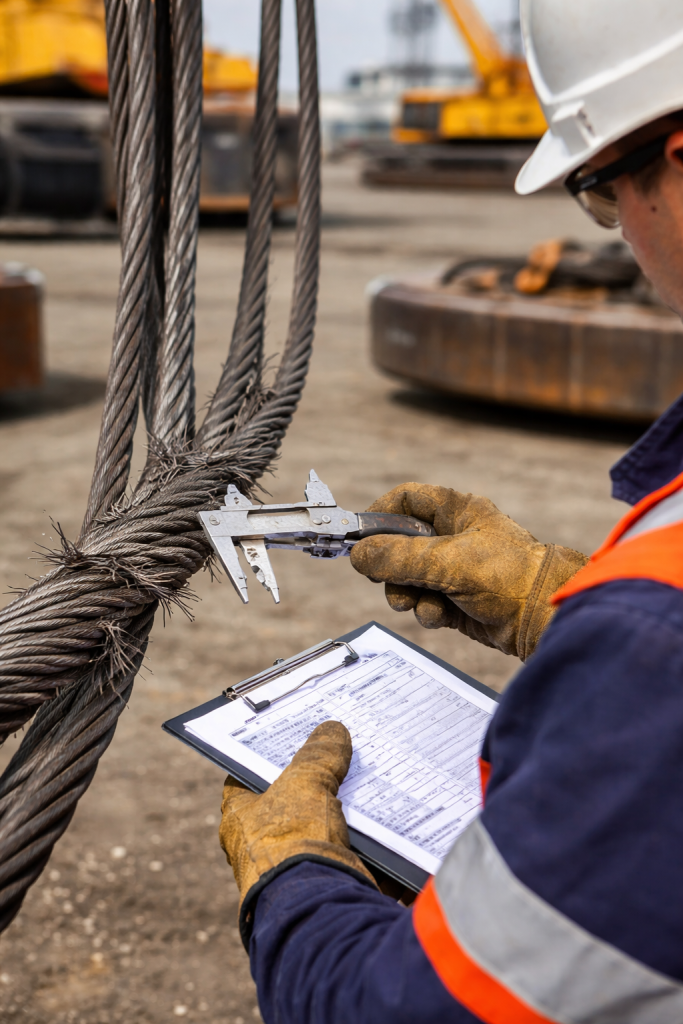
One of the most direct methods to assess wire rope condition is visual inspection. Broken wires on the rope surface are the most common indicator of wear. For example, international standards such as ISO 4309 provide criteria for replacement based on the number of broken wires per unit length. In a standard 1-meter length of wire rope, exceeding 6 to 12 broken wires generally indicates that the rope is approaching the end of its safe service life. Special attention should be paid to broken wires concentrated near hooks, end fittings, or points of high stress, as localized damage significantly increases the risk of failure. Visual inspection should also include checking for fraying or unraveling strands, which can compromise the rope’s strength and flexibility.
Diameter Reduction and Deformation
Wire rope wear often manifests as a reduction in rope diameter due to strand flattening or internal wear. Measuring the rope diameter at multiple points and comparing it to the manufacturer’s original specification is critical. A reduction of 5% to 10% typically signals significant wear. Additionally, deformation such as crushing, kinking, or birdcaging—where the rope strands separate and form loops—indicates structural compromise. These deformations not only weaken the rope but also increase the likelihood of snags, friction, and uneven load distribution during lifting operations. Wire ropes exhibiting these conditions should be removed from service immediately.
Corrosion and Environmental Damage
Environmental factors play a major role in wire rope degradation. Exposure to moisture, chemicals, saltwater, or high temperatures can accelerate corrosion, reducing the rope’s tensile strength. Signs of corrosion include surface rust, pitting, and discoloration. In severe cases, corrosion can penetrate internal strands, making the damage invisible from the outside. Galvanized or stainless steel wire ropes offer improved corrosion resistance, but even these require regular inspection in harsh environments. Ropes with significant corrosion or rusting must be replaced promptly to avoid sudden failure.
Fatigue and Flexibility Loss
Wire ropes subjected to repeated bending, overloading, or shock loads experience fatigue. Fatigue manifests as stiffness, reduced flexibility, and cracking of individual wires. Operators should check for unusual stiffness along the rope length, which may indicate internal fatigue that is not immediately visible. Fatigue reduces the rope’s ability to absorb dynamic loads and increases the likelihood of strand breakage under normal operation. Maintaining records of rope usage, load cycles, and operating conditions helps assess fatigue and determine replacement timing before catastrophic failure occurs.
Manufacturer Guidelines and Industry Standards
Manufacturers provide service life estimates and replacement criteria based on construction, material, and typical operational conditions. Following these guidelines ensures that wire ropes are replaced before reaching critical wear thresholds. Industry standards such as ISO 4309, OSHA regulations, and ASME B30.9 specify inspection intervals, evaluation methods, and replacement criteria. Adhering to these standards enhances safety and compliance, minimizing the risk of accidents in industrial settings.
Preventive Measures and Risk Mitigation
Beyond inspections, preventive measures can extend wire rope life and improve safety. Proper installation, including correct tensioning and alignment with sheaves and drums, reduces localized wear. Lubrication protects strands from friction and corrosion. Operators should also avoid shock loading, side loading, and sharp bends, which accelerate wear. Implementing a structured maintenance program, combining regular inspections, usage tracking, and environmental monitoring, ensures timely replacement and reduces operational risks.
Conclusion
Determining when a wire rope has reached its replacement cycle is a vital aspect of lifting and hoisting safety. Regular visual inspections, monitoring broken wires, diameter reduction, deformation, corrosion, and fatigue are all essential steps. Adhering to manufacturer guidelines and international standards ensures that wire ropes are replaced before failure occurs, protecting both personnel and equipment. By combining preventive maintenance, careful monitoring, and operator training, organizations can maintain reliable, safe, and efficient lifting operations while minimizing risks associated with wire rope failure.

 English
  Korean
  Japanese
  Russian
  Arabic
  Spanish
  German
  French
  Italian
  Portuguese
  Chinese
  Dutch
Dutch  Polish
  Czech
Czech  Hungarian
  Finnish
  Swedish
  Vietnamese
  Thai
Thai  Turkish