
wonzh

What Does IWRC Mean in Industrial Wire Rope? Strength and Safety Analysis

In industrial lifting systems, abbreviations like IWRC, FC, and WSC appear frequently in rope specifications. Among them, IWRC is one of the most important for crane, mining, and heavy-duty applications. Understanding what IWRC means — and how it affects strength, fatigue resistance, and safety — is critical for engineers, maintenance teams, and procurement professionals. This […]

What Does IWRC Mean in Industrial Wire Rope? Strength and Safety Analysis Read More »
Preventing Wire Rope Twist During Replacement: The Role of Rotary Joints

In industrial lifting, hoisting, and material handling systems, wire rope replacement is a routine yet critical maintenance task. Improper handling can introduce twist or rotation in the rope, leading to: Understanding why wire ropes twist and how to use rotary joints (rotary swivels) can improve maintenance efficiency and extend rope life. 1. Why Wire Ropes

Preventing Wire Rope Twist During Replacement: The Role of Rotary Joints Read More »

Air Leakage in I&C Systems: Identifying Symptoms, Causes, and Root Causes for Industrial Reliability

Instrumentation and Control (I&C) systems are critical for safe and efficient operation in industrial plants. Any malfunction in these systems can directly affect process accuracy, equipment safety, and operational costs. Among common I&C issues, air leakage is often underestimated, yet it can lead to significant performance degradation if not properly diagnosed. Understanding air leakage as

Air Leakage in I&C Systems: Identifying Symptoms, Causes, and Root Causes for Industrial Reliability Read More »

6 Indicators That Predict Premature Wear in Industrial Equipment

Premature wear in industrial equipment rarely happens without warning.In most mechanical systems, early-stage signals appear long before component failure. For maintenance managers and engineers, recognizing these indicators can significantly reduce: Below are 6 key indicators that help predict premature wear in industrial machinery. 1. Abnormal Vibration Levels Vibration analysis is one of the most reliable

6 Indicators That Predict Premature Wear in Industrial Equipment Read More »

5 Maintenance Strategies to Reduce Wear Part Replacement Costs by 30%

In industrial equipment, wear parts are unavoidable consumables. However, frequent replacement is not always caused by material failure — it is often the result of improper maintenance, poor alignment, or uncontrolled operating conditions. For factories operating heavy machinery, transmission systems, or material handling equipment, optimized maintenance strategies can reduce wear part replacement costs by up

5 Maintenance Strategies to Reduce Wear Part Replacement Costs by 30% Read More »

7 Material Options for High-Wear Industrial Components and Their Performance Comparison

In industrial environments such as mining, material handling, transmission systems, and heavy machinery, wear components are exposed to continuous friction, impact, and high load. Selecting the correct material for high-wear parts directly affects: Below are 7 commonly used materials for high-wear industrial components, along with their performance characteristics and application scenarios. 1. High Carbon Steel

7 Material Options for High-Wear Industrial Components and Their Performance Comparison Read More »

6 Cost-Control Strategies in OEM CNC Component Manufacturing

In OEM CNC component manufacturing, cost control is not simply about lowering machining prices. It requires balancing precision requirements, material performance, production efficiency, and long-term reliability. For industrial buyers and equipment manufacturers, understanding where costs originate helps prevent unnecessary spending while maintaining functional performance. Below are 6 practical cost-control strategies widely applied in OEM CNC

6 Cost-Control Strategies in OEM CNC Component Manufacturing Read More »

5 Ways Precision Machining Improves Industrial Equipment Reliability

In industrial environments, equipment reliability directly impacts productivity, safety, and maintenance cost.While material selection and system design are important, precision machining quality often determines whether mechanical systems operate smoothly over the long term. Below are 5 practical ways precision machining enhances industrial equipment reliability, especially in applications involving bearings, transmission systems, sealing assemblies, and high-load

5 Ways Precision Machining Improves Industrial Equipment Reliability Read More »

8 Critical Tolerances to Control in Custom CNC Machined Parts

In industrial equipment and mechanical assemblies, dimensional tolerance is not just a drawing requirement — it directly affects assembly accuracy, operational stability, and long-term reliability. For OEM buyers and maintenance engineers, understanding which tolerances are truly critical can significantly reduce failure rates and unnecessary production costs. Below are 8 critical tolerances that must be properly

8 Critical Tolerances to Control in Custom CNC Machined Parts Read More »

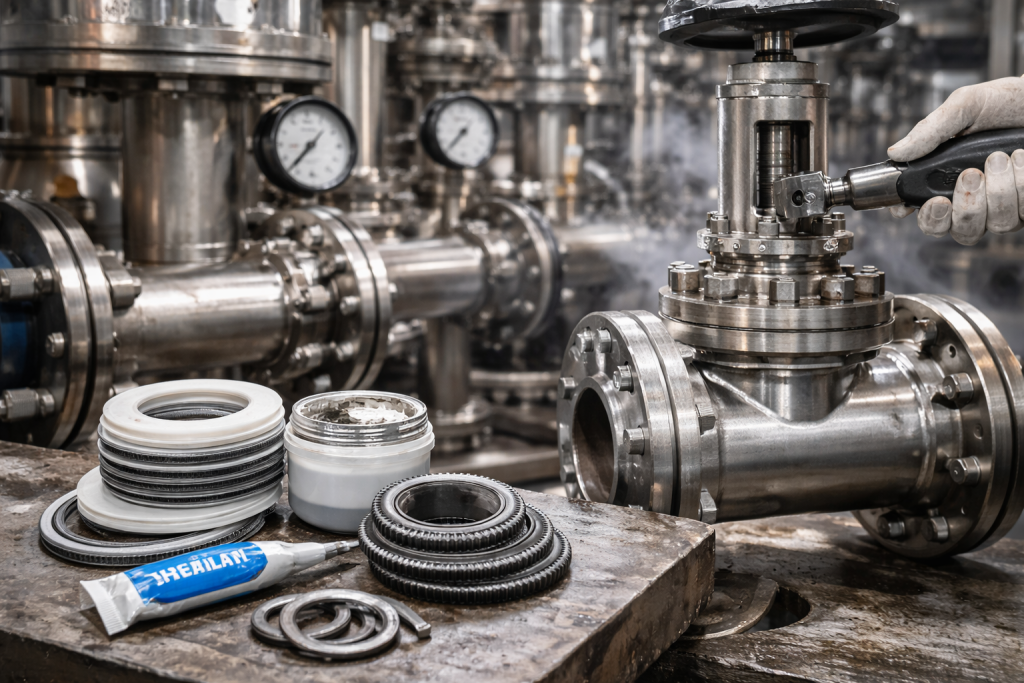
How to Prevent Leakage in High-Pressure Valve Systems

High-pressure valves are critical components in chemical, oil & gas, power generation, and process industries. Leakage in these systems can result in safety hazards, environmental contamination, operational inefficiency, and costly downtime. Proper design, material selection, installation, and maintenance practices are essential to ensure leak-free operation. This guide outlines practical strategies to prevent leakage in high-pressure

How to Prevent Leakage in High-Pressure Valve Systems Read More »

en_USEnglish