
Shafts and gears are fundamental components in industrial machinery, playing a critical role in power transmission, motion control, and mechanical efficiency. Poorly designed or improperly specified shafts and gears can lead to premature wear, mechanical failure, and costly downtime. Optimizing their design is particularly important when components are custom-made to meet specific industrial requirements. This article explores the key considerations, methodologies, and best practices for designing custom shafts and gears that maximize performance, reliability, and service life.
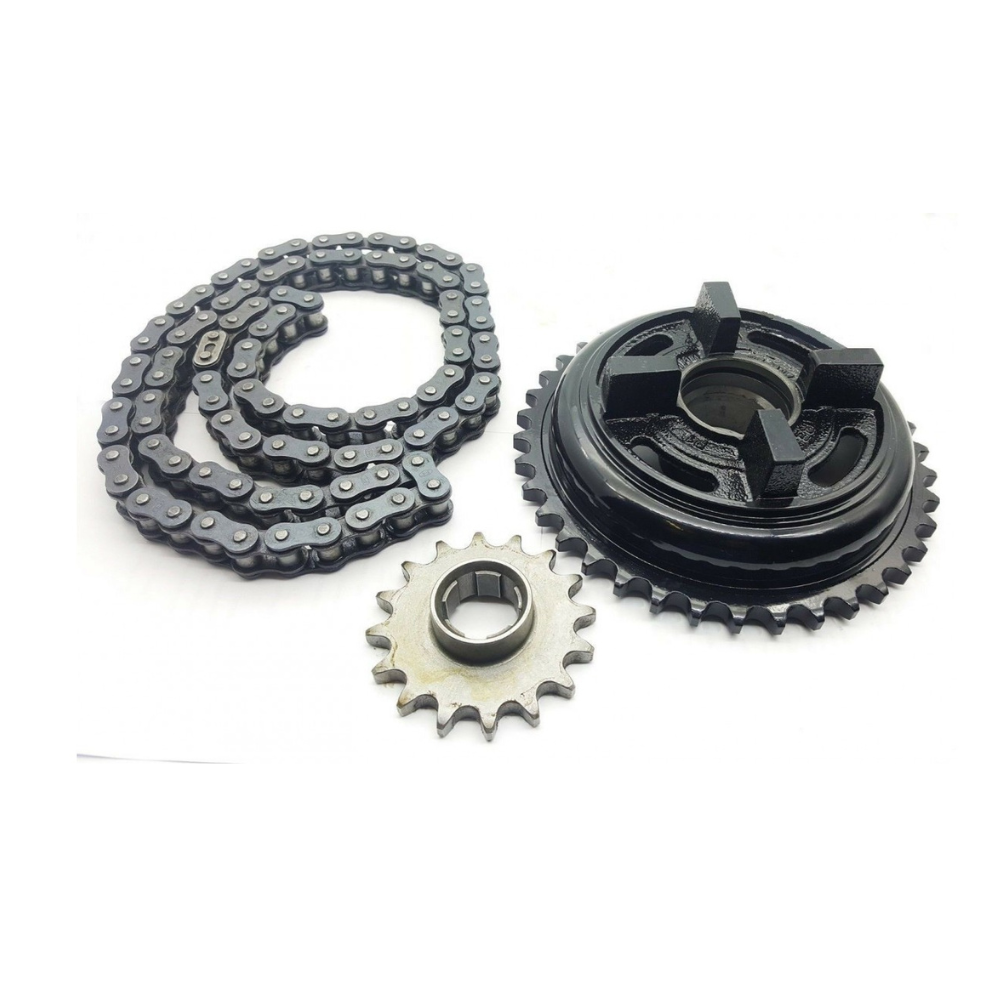
1. Understanding Operational Requirements
The foundation of any custom shaft or gear design is a thorough understanding of the operational requirements. Key parameters include:
- Load conditions: torque, bending, axial, and radial forces
- Speed: rotational or linear velocity, acceleration, and deceleration rates
- Duty cycle: continuous, intermittent, or shock loading conditions
- Environmental factors: temperature, humidity, corrosive media, and vibration levels
Defining these factors allows engineers to select appropriate materials, dimensions, and tolerances. For example, shafts operating under high torque with frequent start-stop cycles require materials with high fatigue strength and optimized cross-sectional geometry to resist bending and torsion.
2. Material Selection and Surface Treatments
Material selection directly impacts the mechanical properties and longevity of shafts and gears. Factors to consider include:
- Strength and hardness to resist bending, torsion, and wear
- Toughness to absorb shock and vibration
- Corrosion resistance for humid, chemical, or marine environments
- Thermal stability for high-temperature applications
Common materials for industrial shafts include alloy steels (e.g., 4140, 4340), stainless steel, and surface-hardened metals. For gears, materials such as carburized steel, nitrided steel, and high-strength alloys are widely used. Surface treatments, including carburization, nitriding, induction hardening, and coating with wear-resistant polymers or metals, further enhance fatigue resistance and reduce friction.
3. Dimensional Accuracy and Tolerances
Precision in dimensions and tolerances is essential for shafts and gears to function effectively. Poorly defined tolerances can result in misalignment, excessive backlash, or premature wear. Key considerations include:
- Shaft diameters, lengths, and keyways
- Gear module, pitch, pressure angle, and face width
- Concentricity, parallelism, and alignment with mating components
- Surface roughness and finishing requirements
Using computer-aided design (CAD) and finite element analysis (FEA) tools, engineers can simulate operational stresses and ensure dimensional tolerances are sufficient to maintain alignment, minimize vibration, and prevent fatigue failure.
4. Gear Profile Optimization
The performance of a gear is heavily influenced by its tooth geometry. Optimizing the gear profile reduces noise, vibration, and wear while maximizing load capacity. Considerations include:
- Tooth shape: involute, cycloidal, or custom profiles for specific load conditions
- Helix angle and module to distribute load across multiple teeth
- Backlash and contact ratio to minimize slippage and improve efficiency
- Surface finishing and lubrication requirements for high-speed or heavy-load gears
Advanced software tools allow for gear contact analysis, stress distribution simulation, and optimization of tooth geometry to suit unique operational requirements.
5. Fatigue and Wear Considerations
Shafts and gears are often subject to repeated cyclic loads, making fatigue analysis critical. Engineers must evaluate:
- Bending stress and torsional stress on shafts
- Contact stress on gear teeth
- Combined loading scenarios and stress concentrations
- Predicted service life under expected duty cycles
Implementing proper material selection, surface treatments, optimized geometry, and regular maintenance schedules can significantly extend component life and reduce the risk of unexpected failure.
6. Manufacturing and Quality Assurance
Custom shafts and gears require precise manufacturing techniques. Machining, grinding, heat treatment, and finishing processes must comply with design specifications. Quality assurance practices, including:
- Dimensional inspection using CMM (coordinate measuring machines)
- Surface hardness verification
- Gear profile measurement and backlash testing
- Non-destructive testing for internal defects
are essential to ensure components meet performance and safety requirements.
7. Integration with Industrial Systems
Optimized shafts and gears must function seamlessly within larger industrial systems. Engineers must ensure compatibility with bearings, couplings, motors, and other mechanical components. Proper alignment, lubrication systems, and load distribution contribute to overall efficiency and reduce maintenance costs.
Sonuç
Custom shafts and gears are critical to the performance, efficiency, and reliability of industrial equipment. Optimizing their design requires a comprehensive understanding of operational requirements, careful material selection, precise dimensional tolerances, gear profile optimization, and attention to fatigue and wear mechanisms. By combining advanced design methodologies, surface treatments, and rigorous quality assurance, engineers can create custom components that meet demanding industrial applications, minimize downtime, and extend equipment service life.

 Turkish
  English
  Korean
  Japanese
  Russian
  Arabic
  Spanish
  German
  French
  Italian
  Portuguese
  Chinese
  Dutch
Dutch  Polish
  Czech
Czech  Hungarian
  Finnish
  Swedish
  Vietnamese
  Thai
Thai