
Steel wire ropes are essential in industrial lifting, hoisting, rigging, and marine applications. Selecting the appropriate material is critical for ensuring safety, durability, and cost efficiency. Among the most commonly used materials are galvanized steel wire ropes and stainless steel wire ropes. Each material has unique properties that make it suitable for specific operating environments. Understanding these differences allows engineers and operators to optimize performance, extend service life, and reduce operational risks.
Galvanized Steel Wire Ropes
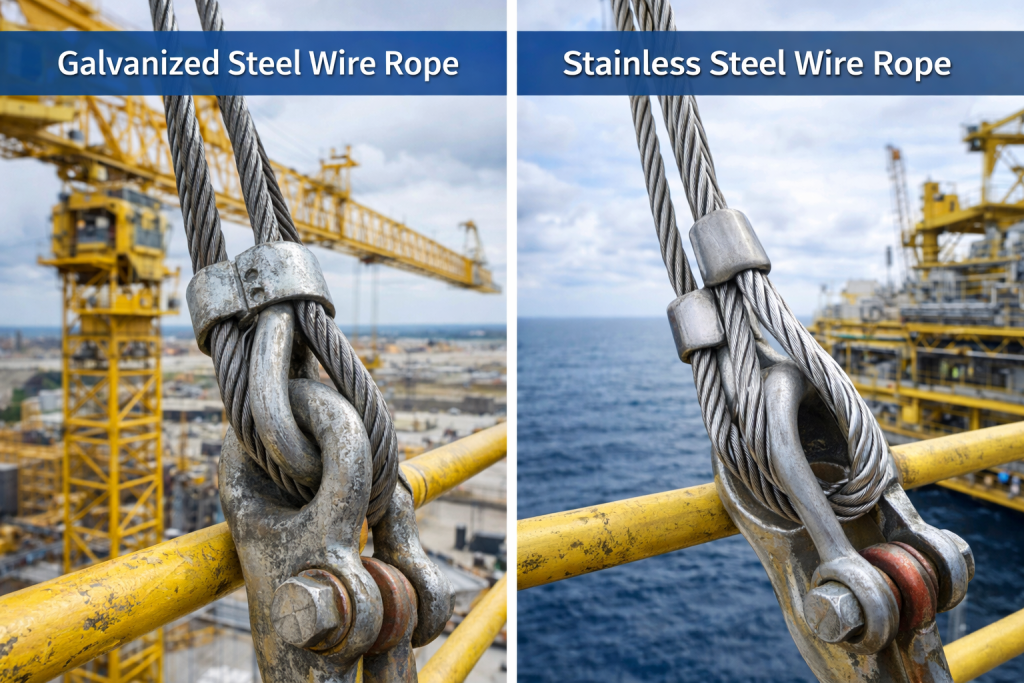
Galvanized steel wire ropes are manufactured by coating carbon steel strands with a layer of zinc. This coating provides a moderate level of corrosion protection, making galvanized ropes suitable for general outdoor and industrial applications.
Galvanized wire ropes are ideal for environments with intermittent moisture exposure or mild corrosive conditions. Common use cases include construction cranes, lifting and hoisting equipment in warehouses, rigging in general industry, and outdoor cable systems that are not continuously exposed to saltwater. Their primary advantages are high strength, cost-effectiveness, and availability in a wide range of constructions and diameters.
However, galvanized ropes are less suitable for continuous exposure to highly corrosive environments, such as offshore platforms, chemical plants, or marine applications. The zinc layer can degrade over time due to abrasion, weathering, or chemical exposure, leading to corrosion of the underlying steel. Regular inspection, lubrication, and preventive maintenance are essential to maintain performance in demanding conditions.
Stainless Steel Wire Ropes
Stainless steel wire ropes are made from corrosion-resistant alloys, typically containing chromium, nickel, and sometimes molybdenum. These materials form a passive oxide layer on the surface, which provides exceptional resistance to rust and corrosion.
Stainless steel ropes are particularly suitable for environments with high moisture, saltwater exposure, or chemical exposure. Common applications include offshore and marine operations, chemical processing plants, food and beverage industries, and medical or pharmaceutical equipment. Stainless steel offers excellent durability in corrosive conditions, maintaining structural integrity and flexibility over long periods.
While stainless steel ropes are more expensive than galvanized steel, their superior corrosion resistance often reduces maintenance requirements and replacement frequency, resulting in long-term cost savings for critical applications. Stainless steel is also preferred for aesthetic or hygienic considerations, where exposure to moisture and contaminants must be minimized.
Comparative Considerations
When deciding between galvanized and stainless steel wire ropes, several factors should be evaluated:
- Environmental Exposure: Stainless steel excels in corrosive, marine, and chemical environments, whereas galvanized steel is adequate for general outdoor or mildly corrosive conditions.
- Mechanical Load and Flexibility: Both materials offer high strength, but stainless steel may be slightly less flexible depending on alloy composition and construction.
- Cost and Maintenance: Galvanized steel provides a lower upfront cost but may require more frequent inspection, lubrication, and replacement in harsh conditions. Stainless steel requires higher initial investment but typically offers lower long-term maintenance.
- Application Specifics: Offshore lifting, marine mooring, and chemical processing often justify stainless steel use. Construction hoists, warehouse lifting, and general outdoor rigging can rely on galvanized steel for economic efficiency.
Maintenance and Inspection Strategies
Regardless of material choice, proper maintenance and inspection are essential. Galvanized ropes should be regularly lubricated to protect the zinc layer, and any signs of corrosion, broken wires, or diameter reduction should trigger replacement. Stainless steel ropes, while highly corrosion-resistant, also require monitoring for fatigue, wear, and abrasion, particularly in bending-intensive operations or when in contact with rough sheaves.
Slutsats
The choice between galvanized and stainless steel wire ropes depends on environmental conditions, load requirements, budget constraints, and operational priorities. Galvanized steel wire ropes provide a cost-effective solution for general outdoor and mildly corrosive environments, while stainless steel ropes offer superior corrosion resistance and durability for harsh, marine, or chemical conditions. Proper selection, combined with regular inspection, lubrication, and preventive maintenance, ensures safe, reliable, and long-lasting performance of steel wire ropes in industrial applications.
 Swedish
  English
  Korean
  Japanese
  Russian
  Arabic
  Spanish
  German
  French
  Italian
  Portuguese
  Chinese
  Dutch
Dutch  Polish
  Czech
Czech  Hungarian
  Finnish
  Vietnamese
  Thai
Thai  Turkish