
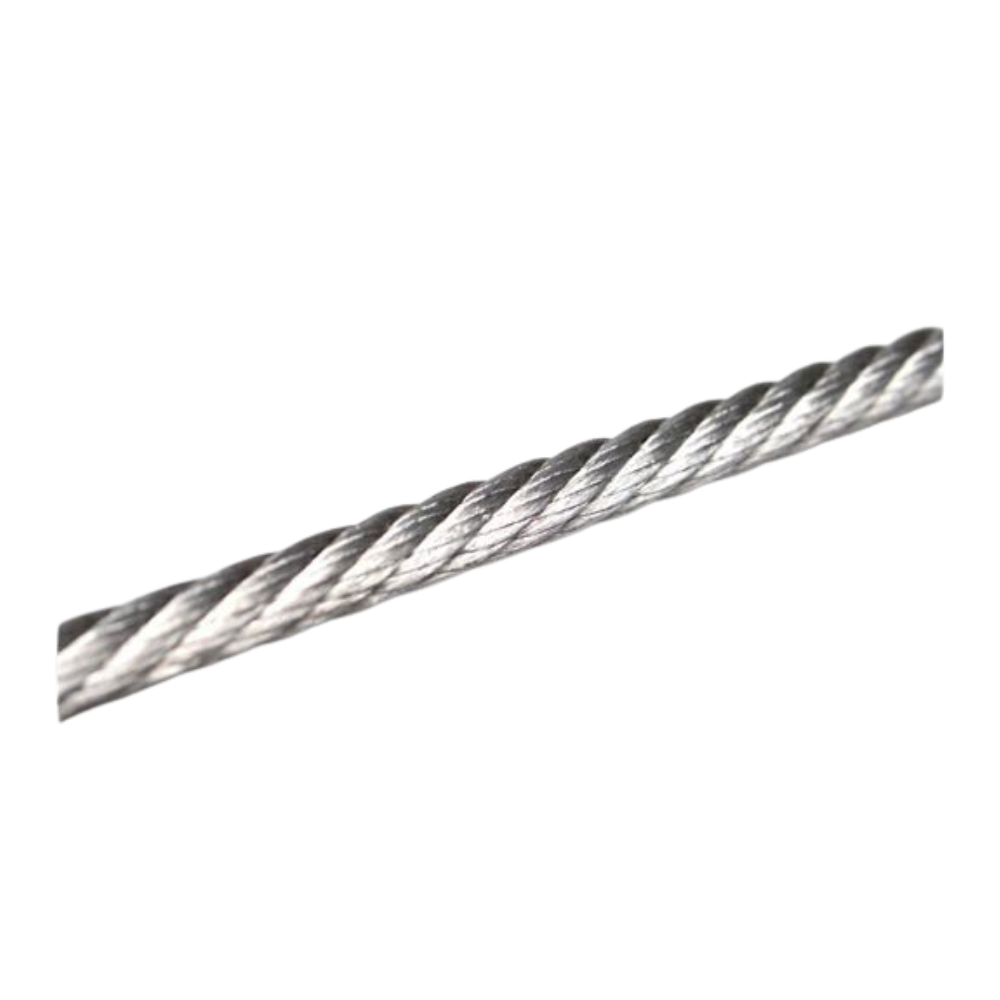
Wire ropes are critical components in heavy machinery, lifting equipment, maritime systems, and mining transport. Their safety directly affects operational efficiency and personnel safety. However, early wire rope failures are still common in practice. Understanding the engineering causes helps extend service life and improve equipment reliability.
1. Overload and Impact Loads
When the tension on a wire rope exceeds its rated capacity, local plastic deformation or micro-cracks can occur, leading to premature failure. Sudden impact loads, such as those caused by abrupt lifting or stopping of heavy loads, can accelerate fatigue damage.
Solutions:
- Select wire ropes according to rated load and diameter.
- Install overload protection devices such as limiters or safety valves.
- Avoid sudden starts and stops to control load variations.
2. Bending Fatigue and Contact Wear
Frequent bending over sheaves, drums, or guide wheels causes bending fatigue. This is especially significant for small-diameter ropes or high bending ratios. Poorly finished sheave surfaces or lack of lubrication accelerates localized wear.
Solutions:
- Optimize the diameter-to-bending-radius ratio to meet minimum bending standards.
- Regularly inspect sheave surfaces to ensure smoothness and remove burrs.
- Apply grease or oil lubrication systems to reduce wear.
3. Improper Installation and End Fittings
Incorrect installation or end termination creates uneven stress distribution, increasing the risk of failure. Examples include over-tightened clamps, incorrectly spaced wire rope clips, or improperly pressed rope ends.
Solutions:
- Follow manufacturer installation guidelines regarding clip number and spacing.
- Ensure end terminations are flat and evenly loaded.
- For special wire ropes, consider mechanical swaging or welded end fittings.
4. Corrosion and Environmental Factors
Exposure to moisture, salt, chemicals, or high temperatures can cause corrosion and stress corrosion cracks, reducing tensile strength. Lack of surface coating or lubrication accelerates this process.
Solutions:
- Use corrosion-resistant ropes, such as galvanized or stainless steel.
- Clean and apply protective lubricants regularly.
- In harsh environments, increase replacement frequency and use protective covers.
5. Internal Defects and Material Quality Issues
Manufacturing defects, such as uneven material, micro-cracks, or twisting irregularities, can shorten fatigue life. Long-term vibration or high-frequency cyclic loads can propagate these defects into fractures.
Solutions:
- Procure high-quality wire ropes that meet international standards (ISO 4344, EN 12385).
- Perform regular nondestructive testing (NDT), such as magnetic particle inspection or ultrasonic testing.
- Use redundant wire ropes in critical systems to reduce the risk of single-line failure.
Conclusão
Early wire rope failures are typically caused by overload, bending fatigue, improper installation, corrosive environments, and material defects. Scientific selection, proper installation, regular maintenance, and monitoring can significantly extend wire rope service life and ensure safe, reliable operation of heavy-duty equipment.
 Portuguese
  English
  Korean
  Japanese
  Russian
  Arabic
  Spanish
  German
  French
  Italian
  Chinese
  Dutch
Dutch  Polish
  Czech
Czech  Hungarian
  Finnish
  Swedish
  Vietnamese
  Thai
Thai  Turkish