
Hydraulic and pneumatic systems are widely used in industrial machinery, automation equipment, and material handling applications. These systems operate under varying pressures, temperatures, and dynamic movements, making seals a critical component for ensuring system integrity, efficiency, and longevity. Selecting the correct seal is essential for preventing leakage, minimizing maintenance, and avoiding unexpected equipment downtime.
This article provides a structured approach to selecting the right seals for hydraulic and pneumatic systems, based on operating conditions, materials, design considerations, and maintenance requirements.
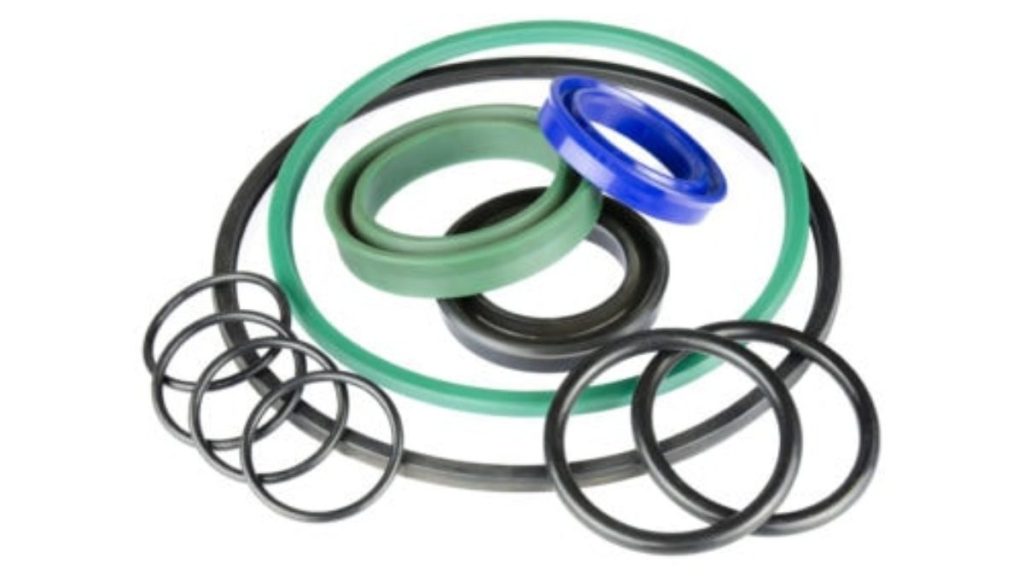
1. Understanding the Function of Seals
Seals are mechanical elements designed to prevent fluid leakage and contamination while maintaining system pressure. They perform several key functions:
- Preventing fluid leakage to maintain hydraulic or pneumatic system performance
- Excluding contaminants such as dust, dirt, and moisture
- Reducing friction between moving components to minimize wear
- Maintaining pressure integrity under dynamic and static loads
Proper seal selection not only protects the system but also extends the service life of associated components such as pistons, cylinders, and bearings.
2. Identifying Operating Conditions
The first step in selecting a seal is analyzing the system’s operating conditions, which influence material choice and design.
Pressure
- Low-pressure systems (<10 bar) may operate effectively with simple O-rings or static seals.
- Medium to high-pressure systems (10–400 bar) require seals designed to resist extrusion, often incorporating backup rings or reinforced profiles.
- Extreme high-pressure applications (>400 bar) may require metallic or hybrid seals.
Temperature
- Standard elastomers such as NBR (nitrile rubber) function effectively between −30°C and +100°C.
- FKM (fluoroelastomer) and silicone are preferred in higher temperature ranges (−40°C to +200°C).
- For cryogenic applications, PTFE or specially formulated polymers are often necessary.
Motion Type
- Static seals remain stationary and mainly prevent leakage at interfaces (e.g., flange connections).
- Dynamic seals operate with relative motion, including reciprocating or rotary motion, requiring materials with excellent wear resistance and low friction coefficients.
Fluid Compatibility
- Hydraulic oils, water-glycol fluids, compressed air, or specialty fluids require seals with chemical resistance to avoid swelling, hardening, or degradation over time.
3. Selecting Seal Materials
Material selection is critical because improper materials can result in early failure or leakage.
| Materiał | Typowe zastosowania | Zalety | Limitations |
|---|---|---|---|
| NBR (Nitrile) | Hydraulic oil, low-medium temp | Cost-effective, good wear resistance | Limited high-temperature performance |
| FKM (Viton) | High-temp hydraulics, chemicals | Excellent chemical & heat resistance | Higher cost, lower elasticity |
| PTFE | High pressure, chemical | Low friction, high temperature | Poor elasticity, may require spring or backup ring |
| Polyurethane | High-pressure dynamic seals | Doskonała odporność na zużycie | Sensitive to certain fluids |
| Silikon | High/low temperature | Wide temp range, inert | Poor wear resistance |
4. Seal Profiles and Design Considerations
Different applications require specific seal profiles:
- O-rings: Simple, cost-effective, suitable for static and some dynamic applications.
- U-cup seals: Common in piston applications, providing efficient sealing under reciprocating motion.
- V-rings and wipers: Protect system from contamination and maintain lubrication.
- Backup rings: Used with O-rings to prevent extrusion under high pressure.
Tip: Always verify dimensional tolerances and housing surface finishes to ensure proper sealing and minimal wear.
5. Maintenance and Replacement Strategy
Even the best seal may fail over time due to wear, temperature cycles, or chemical exposure. Effective maintenance practices include:
- Regular inspection for leakage, deformation, or hardening
- Keeping spare seals on hand for critical systems
- Monitoring system pressure and temperature to prevent operating outside design limits
- Documenting replacement intervals for dynamic seals
By incorporating preventive maintenance, equipment reliability and service life can be significantly improved.
6. OEM vs. Replacement Seals
Many industrial operations face the choice between OEM seals and compatible replacement seals:
- OEM seals: Manufacturer-approved, guaranteed fit, slightly higher cost.
- Replacement seals: Cost-effective, flexible sourcing, must be carefully matched for size, material, and pressure rating to avoid failure.
A competent supplier can provide technical verification to ensure that replacement seals perform equivalently to OEM parts.
7. Practical Seal Selection Checklist
Before finalizing a seal, consider:
- Type of fluid and chemical compatibility
- Operating pressure and temperature range
- Motion type: static, reciprocating, or rotary
- Environmental factors: dust, water, or contamination
- Availability: OEM or replacement parts
- Maintenance schedule and expected service life
Answering these questions reduces the risk of premature failure and improves system efficiency.
8. Conclusion
Selecting the right seal for hydraulic and pneumatic systems requires a thorough understanding of system requirements, material performance, seal design, and maintenance practices. Correct seal selection prevents leaks, reduces maintenance downtime, and improves equipment longevity.
A systematic approach that considers load, pressure, temperature, motion, and fluid compatibility ensures reliable operation and minimizes total cost of ownership. Engineering teams and maintenance professionals should collaborate closely with trusted suppliers to verify seal specifications and select the most appropriate solution for each application.

 Polish
  English
  Korean
  Japanese
  Russian
  Arabic
  Spanish
  German
  French
  Italian
  Portuguese
  Chinese
  Dutch
Dutch  Czech
Czech  Hungarian
  Finnish
  Swedish
  Vietnamese
  Thai
Thai  Turkish