
Air compressors are essential components in industrial facilities, providing pressurized air for pneumatic tools, process automation, and control systems. During long-term operation, seals and gaskets play a critical role in maintaining pressure integrity, preventing air leakage, and ensuring the efficiency of the system. However, these components are often exposed to high pressures, fluctuating temperatures, chemical contaminants, and mechanical wear, all of which can compromise their performance and lifespan.
Effective strategies for extending the service life of seals and gaskets require a combination of material selection, design optimization, maintenance practices, and operational monitoring.
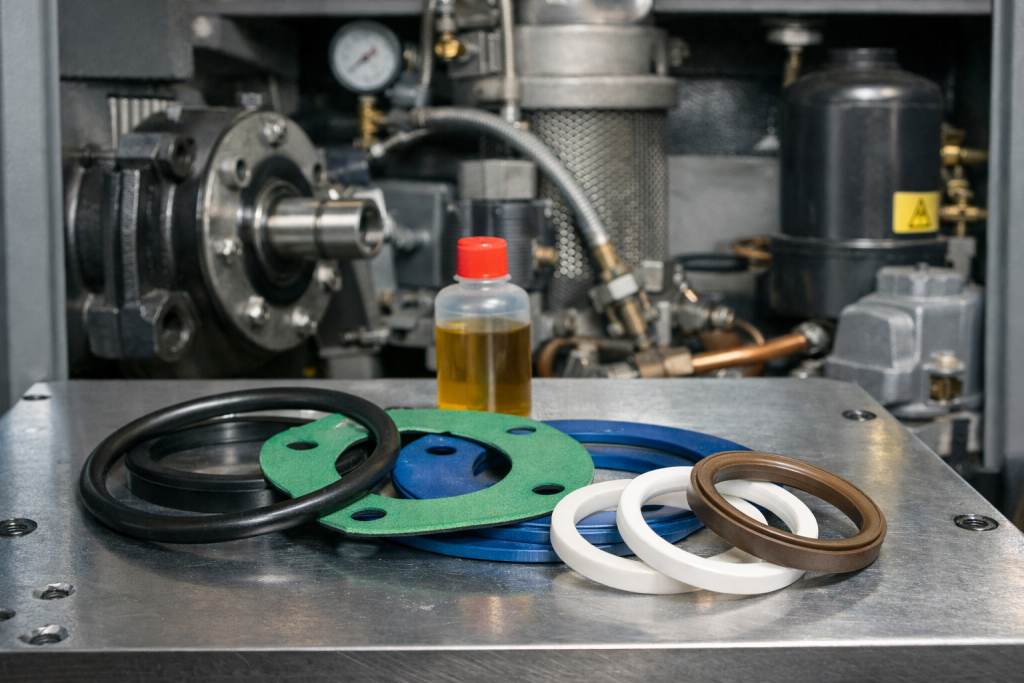
Understanding the challenges
Seals and gaskets in air compressors face several challenges during continuous operation:
- Pressure cycling: Frequent start-stop cycles and pressure fluctuations create dynamic stress on sealing elements, potentially causing extrusion, deformation, or cracking.
- Temperature variations: Heat generated during compression and ambient temperature changes can accelerate material aging, reduce elasticity, or promote hardening.
- Chemical exposure: Lubricants, condensate water, and occasional contaminants can interact with sealing materials, leading to swelling, degradation, or chemical breakdown.
- Mechanical wear: Friction between rotating shafts and static seals or repeated compression of gasket materials can erode the surface, reducing sealing efficiency.
If left unaddressed, these factors can lead to air leaks, energy loss, equipment downtime, or even catastrophic failure of high-pressure systems.
Material selection and compatibility
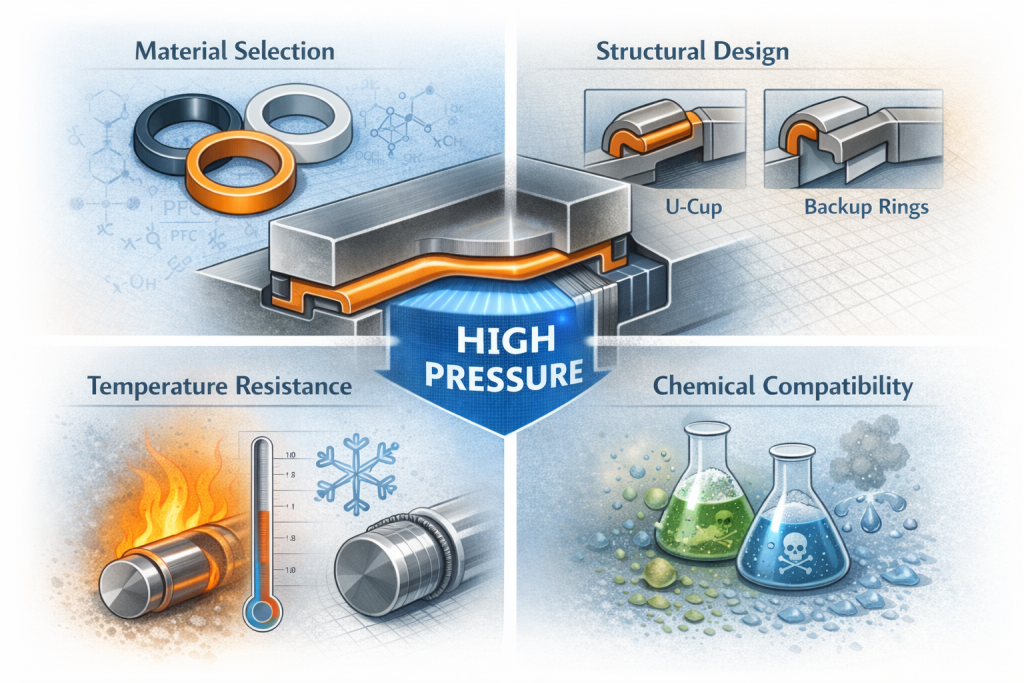
Choosing the right material for seals and gaskets is the first step in prolonging service life. Key considerations include:
- Elastomer type: Common materials include NBR (nitrile rubber), FKM (fluoroelastomer), EPDM, and FFKM. Each material offers different resistance to heat, chemicals, and pressure. For example, FKM is suitable for high-temperature or oil-contaminated environments, while EPDM excels in aqueous or steam-exposed systems.
- PTFE and composite gaskets: Polytetrafluoroethylene and reinforced composites provide excellent chemical resistance and low friction, reducing wear in dynamic sealing applications.
- Hardness and elasticity: Selecting the appropriate Shore hardness ensures that seals can withstand extrusion under pressure while maintaining flexibility for effective sealing.
Compatibility between the sealing material and operational fluids or condensates is critical to prevent premature degradation.
Design and structural considerations
Optimized seal and gasket design directly affects durability:
- Proper compression: Gaskets should be compressed within the manufacturer-recommended range to avoid over-compression, which can cause cracking, or under-compression, which leads to leakage.
- Seal geometry: Dynamic seals benefit from lip designs that maintain contact while reducing friction. O-rings and backup rings can prevent extrusion under high pressure.
- Surface finish: Mating surfaces should have controlled roughness to ensure proper sealing without causing micro-abrasion. Typically, Ra values below 0.8 μm are recommended.
- Redundant sealing: In critical applications, double O-ring or tandem gasket configurations can provide backup in case of partial failure, extending overall system reliability.
Lubrication and operating conditions
Lubrication is essential for dynamic seals and moving gaskets:
- Lubricant type: Use compatible, high-quality lubricants that form a protective film on seal surfaces, reduce friction, and prevent chemical attack.
- Lubrication interval: Maintaining proper lubrication intervals avoids dry running, which can accelerate wear and thermal degradation.
- Temperature control: Managing heat through cooling systems or controlled duty cycles minimizes thermal aging of elastomers and polymeric materials.
Maintenance and inspection strategies
Long-term reliability depends on proactive maintenance and monitoring:
- Scheduled inspections: Regular checks for leaks, surface degradation, or material hardening allow early detection of potential failures.
- Replacement planning: Replace seals and gaskets based on operational hours, pressure cycles, and observed wear, rather than only upon failure.
- Predictive monitoring: Pressure sensors, vibration analysis, and flow monitoring can indicate compromised sealing before catastrophic leakage occurs.
- Clean operating conditions: Prevent contamination of seal interfaces with dust, debris, or aggressive chemicals to reduce wear and chemical degradation.
Advanced solutions
For high-demand applications, advanced engineering solutions can further extend seal and gasket life:
- Composite and coated seals: DLC-coated elastomers or PTFE-embedded composites reduce friction and resist chemical attack.
- Pressure-balanced designs: In high-pressure compressors, using pressure-compensating seal arrangements reduces extrusion stress and deformation.
- Condition-based maintenance systems: Integration of IoT sensors and real-time monitoring allows predictive replacement and optimization of operating parameters.
Conclusie
Seals and gaskets are critical to the efficiency and safety of air compressors, especially in long-term operation. Extending their service life requires a holistic approach encompassing material selection, design optimization, lubrication management, and proactive maintenance.
By implementing these strategies, engineers can minimize leaks, reduce energy loss, improve system reliability, and lower operational costs. The combination of modern materials, precision design, and predictive monitoring ensures that air compressors operate efficiently even under continuous, high-demand conditions, maintaining both performance and safety standards.
 Dutch
Dutch  English
  Korean
  Japanese
  Russian
  Arabic
  Spanish
  German
  French
  Italian
  Portuguese
  Chinese
  Polish
  Czech
Czech  Hungarian
  Finnish
  Swedish
  Vietnamese
  Thai
Thai  Turkish